Pages

Thursday, February 03, 2022

Flow


Flow.

The Sixth Year Common Room was zoned. There was the smaller end-room where the arty kids hung out, the ones who arranged to go see Del Amitri play the Barrowlands at the weekend. That was the space where I spent the most time. There was the large room, a more general space, but zoned, around the in-crowd. I was reasonably welcome there, but never entirely comfortable. I had been popular in the First year, not least because I was the one who brought a leather football to school, for the sprawling matches that occupied our playtime breaks; I kept goal, diving on tarmac, repeatedly going through the knees of trousers, causing my mother great distress; but in the Second year, depression touched my life, and from then, I was on the edge, in case the shadow be contagious. And then there was the space, just inside the door, that the outsiders made their den. The one who fantasised about killing people (and probably would have done, had it been America). The ones who today would be called Incels. The ones who were deliberately ‘deviant’ in their sexuality, as an act of rebellion. The one who would become the first of our cohort to die, of an overdose, not long after we left school. I deliberately spent time there, too. Once, a girl from a ‘good’ Christian family asked me, “Ugh. Why do you hang out with these people? They are…repulsive.” All I could offer her in response was that Jesus loved them and would have me be their friend. I don’t know that I have much more to add to this day.

They offered one another acceptance in that space, but it wasn’t a healthy space. The misfits who gathered there could be themselves, but in many ways, it was as toxic as the in-crowd space, where no-one was truly themselves at all (including, but by no means limited to, the ones who would come out at some future time).

I won a couple of school prizes that year, for Geography and for History, and chose books on architecture, poured over line drawings setting out principles of the flow of people (and light, and wind) through architectural space.

There are limits to spaces. There is a place for designated spaces, bedrooms for example, but also for communal spaces and still other spaces that connect them all. There is a place for open-plan space, for daily life shared, in common and without differentiation, segregation, privacy. But there are limits to open plan living, too. And every solution raises its own set of problems, notably unforeseen or perhaps dismissed as worth the cost, by those who will not be the ones living with the cost.

We all need spaces for our lives to be lived. Purpose-built, well-constructed, safe. But every space has its limits. At the limits of identity politics, in all its expressions, potential friends are pushed to become enemies, those who demand to be seen and heard refuse to see and hear others, those who needed to leave a space in which they were not permitted to ask questions refuse to be asked genuine, respectful, and sometimes challenging questions.

The ways in which our designated spaces connect, and the flow of movement between them, matters. And we will feel more, and less, at home from one space to another. Will relate to people differently, in each of our intimate, our personal, our social and our public spaces.

How do we create robust communal spaces, where we can co-exist well?

In a polarised society, this question is one we need to attend to.


Wednesday, February 02, 2022

Strength


Mr Putin is amassing invasion-ready troops on the border with Ukraine—and simultaneously accusing the US administration of provoking a war as a pretext to impose economic sanctions against Russia.

This is classic bully behaviour: reframing the story, when they are stood up to, the bully insisting that they are the one being bullied. The narcissist, on being held to account, crying, ‘I am the victim of a witch-hunt against me!’

Politics (in the widest sense) is about power: including the power to do good; and—with the best of intentions—to cause unintended harm. And power is easily abused. Therefore, (well-intentioned, most often Left) political solutions to the problem of bullying produce systems that are susceptible for co-option by the bullies themselves. The very structures put in place to protect the vulnerable end up creating cover for the Übermensch.

I am currently enjoying watching the tv series Superman & Lois with my wife and our teenage son. In the pilot episode, Clark Kent, his wife Lois Lane, and their teenage sons Jonathan and Jordan Kent move from Metropolis to Smallville, the backwater Kentucky town where Clark grew up. Smallville needs them; but Clark and Lois recognise, their family needs Smallville as much as (perhaps more than) Smallville needs them. This family needs Smallville, and something that is found in Smallville, but that Metropolis lacks.

Superman and Clark Kent are not so much alter-egos as the same person in different spheres. Superman is saving the world; Clark is trying to be a father to teenagers.

One sphere is concerned with power—and, yes, how to exercise self-control, and build (or lose) trust, and be accountable, all of which a father needs to pass on to his sons, for the political sphere is a sphere of all our lives.

The other is concerned with covenant. With commitment to the common good of a group of people who have much that is not shared in common. People with different personalities, facing different challenges, having different values and aspirations, coming to different conclusions as to the best way forward—yet committed to one another.

Smallville has endured some hard times, but here there is still a civil society based not on power or expediency but on neighbourliness and free association. It is at risk, cannot be taken for granted; but, nonetheless, it is still there, in the fabric of the place.

If we hope to be the kind of society where bullying does not flourish, we won’t get there by legislation, which is not to say that legislation does not have its place, but that it has is limits. We will need a very different vocabulary, a different playbook. We will need to learn to be curious, to ask questions for clarification, to suggest ways forward held lightly and open to counter-suggestions, to negotiate compromises, to take time-out, forgive, ask for forgiveness, seek to bless, prefer others over our own interests. In such ways we build resilience and healthy esteem for ourselves and for others.

There is a strength to power. But there is a greater strength to vulnerability.


Tuesday, February 01, 2022

Righteousness and justice


I am struck by the Old Testament reading set for Morning Prayer today, taken from Genesis 18. In it, the LORD and his friend Abraham are in an honest and robust conversation.

Ahead of this, we are reminded that the LORD’s call on the descendants of Abraham—that is, the Jews, Christians, and Muslims—is that through them every human society might be blessed. Might enjoy life, in its fullness. This will come about as the family of Abraham attend to righteousness and justice.

Righteousness is the antidote to sin. For sin is the distance that, left unattended, grows between us; whereas righteousness is the paying of careful attention to all our relationships.

Justice is the antidote to evil, or wickedness—which is to act according to evil. For evil is indifference towards our neighbour, indifference towards whether they prosper or languish, flourish or wither; whereas justice attends to the conditions that enable all to flourish.

The LORD lets Abraham know that a report has been brought to his ears concerning the great sin of Sodom, and that he intends to investigate and to pass judgement. We know nothing of how that great sin is manifest; but do well to remember that sin is distance between us. We first hear of the great sin of Sodom at the point where Abraham’s nephew, Lot, settles there. Between them, Abraham and Lot’s flocks and servants were sufficiently great that they needed to part company, as neighbours rather than one unit. But in noting that Lot moved away as far as Sodom, the distance is emphasised. The distance between uncle and nephew is great. Later still, the city of Sodom is defeated in battle and its inhabitants, including Lot and his family, are carried off even further away from Abraham—who sets out to bring them all back, for his nephew’s sake.

Now, in conversation with the LORD, Abraham asks God to do as Abraham has done. To bless all communities, by allowing the unrighteous to enjoy the benefits of the righteous. Abraham asks the LORD not only to look for evidence of sin—which will be easily found—but also to search for evidence of righteousness and justice, however few examples may be present.

This matters, in investigating, gathering evidence, and coming to a decision as to how to respond. That reports of great sin—of a gulf between the perpetrators and wider society—be taken seriously, not dismissed, not swept under the carpet. But that evidence of righteousness also be looked for, noted, honoured. And for the sake of a righteous remnant, not that there be no consequences for the wicked, but that the whole community is not consumed by wrath.

In our anger at the wickedness of the Executive—their utter indifference towards their neighbour—may we refrain from writing-off all our elected Members of Parliament.


Monday, January 31, 2022

The Responder, baptismal and otherwise


Two things I am known for: helping people prepare for baptism and watching tv dramas.

The Responder follows a police officer over several days, as his life falls apart. It is a fine performance from actor Martin Freeman, including the most convincing Scouse accent by a non-Scouser I have heard on tv. Indeed, this gritty, harrowing tale is full of fine performances from an excellent cast. And every single character, no matter what part they play in the story, is just about at breaking point.

It is easy to dismiss drama as exaggerating for dramatic effect. Or to rail against portrayals of corruption as unhelpful. If you work within an institution—the police force, for example, or the Church—it is easy to become defensive about portrayals of corruption (in fiction, or the news) as misrepresenting an overwhelming majority of good people. But, as The Responder sees with wide-eyed clarity, good people—or people who try to do good, or to do ‘the right thing’—make bad decisions when they feel forced into a corner. When they or their families are threatened with violence, or even loss of face. This is even more likely when we are under a more general stress pressure. And, like the full range of people from diverse backgrounds in The Responder, so many of the real people I know in real life are living with unbearable loads right now.

(This crisis response is as old as human nature: in the Old Testament reading set for Morning Prayer today, we see Sarah trying to cover herself when her eavesdropping is uncovered; and in the Gospel reading we see Pilate make successive and increasingly desperate attempts to save Jesus from a lynch mob, ultimately putting his own skin and that of his family ahead of the life of an innocent stranger.)

At the heart of Baptism are four questions and responses, made for ourselves or, in the case of an infant, by parents and godparents on their behalf. In their most simple form, these are:

Do you turn away from sin?

I do.

Do you reject evil?

I do.

Do you turn to Christ as Saviour?

I do.

Do you trust in him as Lord?

I do.

These questions and answers acknowledge the reality that The Responder depicts.

That there is a distance that grows between us—‘sin’—even between us and those we love the most, that must be turned away from if we are to close that gap, if we are not to vanish from our own lives.

That the refusal to love our neighbour—for that is the definition of ‘evil,’ an indifference towards others—must also be strongly, and communally, rejected. You cannot mitigate against indifference by indifference: this is not a vaccine scenario where a small dose of indifference immunises society against potentially fatal indifference.

But also that we find ourselves, from time to time, in a hole where to keep on digging would only make it deeper. We need saving, from those who would harm us, including our own actions. In Christ, God is with us and for us, not necessarily rescuing us from consequences, but rescuing us from the disaster we catastrophise by bringing life out of death.

For, in all things, he is at work to reconcile all things—relationships, conflict, pain, the good we fear losing but cannot hold on to however hard we try—to bring about not a neat resolution and a Happily Ever After fairy-tale ending, but fresh beginnings and a true peace even in the most complex and challenging of circumstances.

I would recommend The Responder to your viewing. But I would recommend baptism preparation—or, for those who have been baptised, a revisiting of the baptismal promises; and, for those christened as a child who have never made the rite your own through Confirmation—even more so.


Tuesday, January 25, 2022

Storytelling for Candlemas


God-Most-High loved our world and often walked the earth, making lasting covenants with his friends, heroes of old such as Noah, and Abraham. Many generations later, Abraham’s descendants were living in Egypt. Shepherds, they had gone there when famine stalked the lands. God-Most-High had prepared the way for them, but that is another story. Now they were conscripted labourers, forced to build temples to the unruly gods of Egypt. When their cries were carried to God-Most-High seated on his throne in the realm of the heavens, he thought about what to do, and then he wrapped himself in his great cloak of darkness and set off to find Moses. He found him, at last, hiding at the back of beyond, as far across the wilderness from Egypt as you can imagine and then further still. Why Moses was hiding there is yet another story. Sitting in a tree that blazed with fire that did not consume it, God-Most-High introduced himself to Moses by the name ‘I AM WHO I AM,’ I will be whom I will be.

‘I AM’ sent Moses, an un-presupposing man who spoke with a stammer, to challenge the gods of Egypt to a series of ten contests. The prize would be Abraham’s descendants, slaves to the Egyptian gods, shepherds in the eyes of ‘I AM.’ The tales of those contests is also another story. Suffice to say that on the eve of ‘I AM’s victory, he spoke to Moses and laid claim to every firstborn male from among the Israelites, both livestock and human.

Now, their livestock was essentially of two kinds. Sheep, for as already noted they were shepherds. And donkeys, beasts of burden, for they had been conscripted into labouring. They did not own cattle, for the fat cattle who grazed along the Nile belonged to the Egyptian class who ruled over their lives as slaves. And Moses spoke to the people and told them that ‘I AM’ had claimed every firstborn male from among them, as a memorial to his victory. Firstborn donkeys were to be redeemed with the life of a firstborn lamb, or if not, then its neck was to be broken. Likewise, firstborn sons were to be redeemed, in memory of the time ‘I AM’ brought them up out of the house of slavery. They were going to be free, but freedom has a value, if only a symbolic price.

Now, the words of God-Most-High were life to all who took note of them, life-giving and life-sustaining. And these words established a ritual that helped the people, generation by generation, family by family, to step into their identity: no longer slaves—symbolised by the donkey, the beast of burden—but now freed to be shepherds—the identity they had in Egypt before they were enslaved—now, moreover, in a land of their own.

You might think that the people would be grateful, but it was not long before they became restless. ‘I AM’ had called Moses up Mount Sinai to speak about life and freedom and the wisdom through which a just and fair society might be formed from nothing more than donkeys and sheep. The people became agitated and took hold of Moses’ brother Aaron, and dragging him before them, instructed him to create a calf of gold, the fabled cow that pulled the chariot of the Egyptian gods, so that, having run away but having now changed their minds, they might petition them for mercy.

‘I AM’ was angry at the ingratitude of the people and got up to destroy them all. But Moses pleaded for mercy. The people were punished, but mostly spared, and Aaron, too, was restored. Nonetheless, ‘I AM’ decided that he could no longer use the firstborn sons for his intended purpose—that they be priests to ‘I AM,’ to help the people to remember. So, ‘I AM’ decided that, instead, the Levites, the only tribe among the twelve tribes who had not turned back to the gods of Egypt to rescue them, should serve as priests in place of the firstborn sons.

But the word of ‘I AM,’ once spoken, stands forever. So, ‘I AM’ instructed Moses to count every firstborn son from among the tribes of Israel, and that redemption money should be paid for every head over and above the number of the Levites. The sum would be five shekels, and it would be paid to the Levites. One thousand three hundred and sixty-five shekels in all. To this day you will find Jewish fathers who redeem their firstborn son from the Cohens, the descendants of Aaron, in this way.

Now, this explains in part why, centuries later, the man Joseph and his wife Mary bring her firstborn son to the Temple. His name was Jesus, and they were not Levites, being instead of the tribe of Judah. This firstborn son, therefore, will never serve as a priest according to the Law. Joseph comes to throw five shekels into the Temple treasury. (However, it is told that this son will serve as a priest, indeed a High Priest, in another order, that of Melchizedek. This Melchizedek was king of Salem, the very place where this young family now stood, in the days of Abraham the friend of God-Most-High. One day, Abraham secured a great victory in battle, and Melchizedek came out and set before Abraham bread and wine and spoke a mighty blessing over his life. This took place in days of old, long before the giving of the Law, and whereas Aaron would receive redemption money from among his own people, Melchizedek received a tenth of all of Abraham’s wealth.)

But there is more to why this month-old child and his parents appear in the Temple. Joseph comes to redeem a son, to claim and to proclaim a story of deliverance. Mary comes, responding to other words of life spoken by ‘I AM’ to his friend Moses, words concerning childbirth and the rights and care of women at this vulnerable time.

Long ago, not long after the world was formed and when there was no one to care for it, the gods had made the first humans, the Gardener—his name was Adam—and the Warrior—her name was Eve. And when their son Cain turned his back on gardening and took up the warrior’s blade and killed his brother Abel, then the blood cried out to God-Most-High for a reckoning. Now, childbirth, like war (for childbirth is war against death) is a bloody business, the woman’s body expelling the placenta, the lifegiving interface between mother and child in the womb. But lifeblood is holy to God-Most-High, and cannot be shed without a reckoning, not even in childbirth. All the same, in this act of self-giving to bring forth life (an act of prefiguration, for, in the words of Simeon to Mary, ‘and a sword will pierce your own soul too’) women participate in their bodies in the deep magic of God-Most-High.

In recognition that they do something no man can ever do, however great his renown may be, ‘I AM’ declared that a woman, having given birth, should receive three gifts. First, she should be held exempt from duty towards God-Most-High, for a period of seven days in the case of a son, or fourteen days in the case of a daughter. Not even her husband was to approach her or ask anything of her on those days. Second, she was to be given time and space set apart from public life: thirty-three days for a son, sixty-six days for a daughter (girls, who, potentially at least, will share in this deep magic, are given twice the time and space). Third, this should be followed by a welcome back to public life: a great celebration of the mother, on the fortieth day of her son’s life, or the eightieth day of her daughter’s life. And at the welcome of a mother back into public life, she is to bring a lamb and a dove—or, two doves, if she cannot afford a lamb—one as an offering of thanks ascending to God-Most-High for bringing her through the broken waters of death in bringing forth life; the other as satisfaction to the earth for life blood that has been spilled.

This, then, is also part of what is going on, here in the Temple. Mary is returning to public life, after forty days of seclusion with her newborn son. Forty days and nights kept safe by God-Most-High in an ark; forty days, recalling forty years God-Most-High dwelled in the very midst of the people in the wilderness, before ever there was a Temple in Jerusalem. This is her first public appearance since her son, her firstborn son, was born. Did those old familiar courtyards now feel strange, as if encountered for the first time, again? Strange or no, she makes her return with a thankful heart, and with reverence for the holiness not only of this place but also of life itself.

Why spend so long retelling backstories? Because these are Jesus’ story, and those of his parents, and they have become unfamiliar to us. How, then, might this story become our story too?

Firstly, notice the importance of ritual to inhabiting our identity, which we do not construct for ourselves but are given as gift, handed down from generation to generation. We are not slaves of hard-hearted gods, but a people called to bear the likeness of God-Most-High who cares for us, as a shepherd cares for their flocks. One whose good purposes can be frustrated at times but not defeated, who begins over again. Stop striving to reinvent yourself and receive.

Secondly, notice that those rituals are defined for us who follow Jesus not by the sacrifices of the Law given through Moses (good though they were—and still are, for ‘I AM’s ancient people, the Jews) but by the bread and wine and blessings spoken over our lives by Melchizedek. Communion is a gift; fellowship is a gift. Don’t decline it.

Thirdly, notice that life is a participation in mystery, whether we are daughters or sons. That it calls for that mix of time alone and time celebrating with others, held together in tension. That it reflects self-sacrificial death and resurrection life, in our flesh and blood. Notice, also, the importance of both a thankful heart and a reverence for the sanctity of life, as well as the patterns that sustain thankfulness and reverence. Some of you have been away a long time, perhaps isolating because of fear of Covid. It is time to come back. Others have not been welcome, their bodies considered too much, their presence an offence. They are coming now because God-Most-High is calling them. The period of their waiting for consolation is drawing towards a close, and their salvation is dawning. Will we welcome them, as Simeon and Anna welcomed the Christ-child, with thankfulness and reverence? Thankfulness, that God-Most-High has allowed us to see what salvation looks like today. Reverence, in the light of a bigger story that will long outlive us and be more than we could ever imagine.

In the coming days we remember the Presentation of Christ in the Temple. May we see him with our own eyes in this place, and may our lives be illuminated by his truth and grace.


Notes: see Exodus 13, Numbers 3, Genesis 14 (and 1-4), and Leviticus 12, all from The Five Books of Moses. See also the first-century Common Era texts The Gospel According to Luke 2:22-40 and the Letter to the Hebrews.


Thursday, January 13, 2022

Close encounters


The Gospel set for Holy Communion today, Mark 1:40-45, catches Jesus out in a compromising position. He has been in close personal contact with someone from whom he is supposed to be socially distanced—someone who might infect him and others—and subsequently he has tried, and failed, to keep this event quiet, out of the public eye. Now he is at the centre of a storm of unwanted attention.

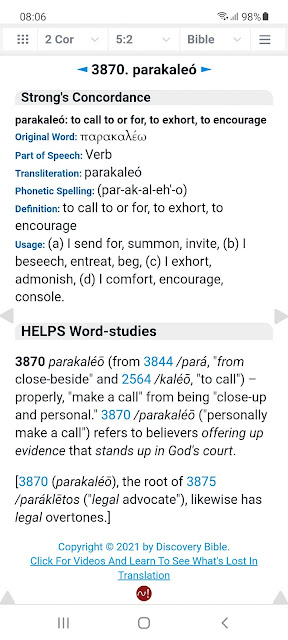
What is interesting is the agency of the outcast or marginalised man. The word my English translation renders ‘begging’—a word that draws out an emotion of disgust and thoughts of shaming, in my cultural context—combines the Greek words to come close-beside someone and to testify to their character and actions. It can be used as a word to describe encouraging someone or admonishing someone.

The leper comes close beside Jesus, to reveal something about him. What this man acts to reveal is that Jesus is both willing (a question of desire) and able (a question of power) to cleanse him, to address the (albeit temporarily necessary) injustice of his isolation from human touch. The desire and power of the leper reveals the desire and power of the celebrated man Jesus.

That is fascinating and exposes our assumptions of where will (or desire) and the means to act on that will (that is, power) lie.

Regardless of our social standing, we can exercise the will and the power to come close-beside someone else to admonish or encourage them, by witnessing to their will and power to do good, or their refusal to respond with such compassion.

We can stand with others, or at a distance. We can empower others or keep power for our own self-interest. We can move to restore others as quickly and fully as possible, preferring them before ourselves—even at cost to ourselves—or not. We can participate in human dignity, or by our actions send ourselves into exile.


Monday, January 10, 2022

Poverty and riches


A collect is a form of prayer, that helps focus our personal prayers according to a shared theme. There are collects for every week of the year, as well as collects for other events or occasions, and the collect for this coming Sunday has long been my absolute favourite:


Almighty God,
in Christ you make all things new:
transform the poverty of our nature by the riches of your grace,
and in the renewal of our lives
make known your heavenly glory;
through Jesus Christ your Son our Lord,
who is alive and reigns with you,
in the unity of the Holy Spirit,
one God, now and for ever.
Amen.


Here ‘the poverty of our nature’ means a recognition that everything we are and have is a gift. We came into this world with nothing, and we shall take nothing with us when we go. And in-between these two moments, we steward the life given us, the world entrusted to us to hand on to those who will come after us. To recognise this poverty of our nature is freedom from hubris. What might otherwise be tragedy and a cause for resentment is transformed into something beautiful in its time, a life for which we can be truly grateful, by the riches of God’s grace at work in our lives, renewing us, so that the glory of God in whose likeness we are formed is revealed.


Thursday, January 06, 2022

Epiphany


The unspecified number of travellers bearing three kinds of gift to the infant Jesus are most likely a consortium of Persian court astronomers (Magi) and Chinese Han dynasty court astronomers. Their arrival at the court in Jerusalem, enquiring after a child born to be king of the Jews, causes consternation.

There is a pattern in the Gospels of identifying events in the life of Jesus as fulfilling earlier events. For example, Isaiah speaks of a woman, pregnant at the time of his speaking some 600 years before Jesus, and of a judgement that will fall before her son is weaned. That Jesus’ birth fulfils this is not to say that Isaiah prophesies Jesus’ birth, but that Jesus’ birth is a similar but greater sign, and that the earlier sign helps us understand what will happen in and through and to Jesus.

In the same manner, I would suggest that the reality that the Christian church today is growing faster—under persecution by the governing authorities—in Iran and China than anywhere else on earth is a fulfilment of the journey of the Magi.

Happy Epiphany to all, and especially to my Iranian and Chinese friends!


Wednesday, January 05, 2022

On the twelfth day of Christmas


When is Christmas?

That’s not as daft a question as it may sound. Obviously, Christmas Day is 25th December. But for many people in our impatient society, Christmas Day is the culmination of Christmas, or at least the summit before a rapid downhill through Boxing Day and the relief of taking down the decorations and collapsing in a heap.

In the Church of England the season of Christmas runs, essentially, from sunset on Christmas Eve until sunset on 5th January, with the season of Epiphany (the Feast of the Epiphany is 6th January) taking up the baton. The Christmas cycle then carries on until Candlemas, on 2nd February. Many churches will take down most of their decorations now, with the crib remaining until Candlemas. I think, though I am not certain, that in the Roman Catholic church the season of Christmas runs until this coming Sunday, the Baptism of Christ, with the Christmas cycle also lasting a little longer into the Sundays before Lent. But small variations aside, what both share in common is that Christmas Day is not the end of the matter but the dawn.

Does it matter, when and how we celebrate Christmas? Well, yes and no. I really don’t think that it matters in terms of when we take down decorations, and even friendly arguments about whether that should be 5th January or 2nd February tend to miss the point.

But I do think that it matters that we, collectively, can’t bear to live in the moment. That we rush to bring the trappings of Christmas into Advent, because it is too stark; that we rush to put away Christmas, because it is too much; that we look for ways to transform our dark and dismal January lives with New Year’s Resolutions because we (think that we) need a New Me. It bothers me that we are, collectively, in such a rush.

It is still Christmas. Joy and peace be with you this day.


Tuesday, January 04, 2022

On giving, and taking, advice at the beginning of a new year


This time of year, there’s a good chance thar your social media feed is full of advice for living well in the year ahead. The New Testament reading set for Morning Prayer today included these verses, from Paul’s Letter to the Colossians, chapter 3:

18 Wives, be subject to your husbands, as is fitting in the Lord. 19 Husbands, love your wives and never treat them harshly.

20 Children, obey your parents in everything, for this is your acceptable duty in the Lord. 21 Fathers, do not provoke your children, or they may lose heart.

It is always hard to translate and apply advice for living well across ages and cultures, and these verses—verse 18 in particular—have been badly mishandled by conservative men and women. But these verses are worthy of a second look.

In the Genesis account of the first man and woman, we are presented with an undifferentiated human, made from the clay of the earth, who is then separated into two equal and non-hierarchical humans: the man, to be the gardener; and the woman, to be the warrior-deliverer, given to rescue the man when he is overwhelmed. The role-description of the woman—Hebrew: ezer, active intervention on behalf of another, especially in military contexts—is one shared by the Lord God.

The word translated ‘submit’ in Colossians 3:18 is a compound of the Greek word for ‘under’ and the word for ‘to arrange.’ Moreover, the word for ‘to arrange’ is used almost exclusively in a military context, for how soldiers arrange themselves in formation. In other words, the form this submission is to take is concerned with fulfilling the vocation to be a warrior. Women are warriors, who fight in all kinds of arenas to deliver, or bring liberation to, men, women and children who experience injustice and oppression. But if you are married, don’t allow the long list of good causes to fight for to come between you and your marriage, which is meant to be a lifegiving and lifelong relationship.

The word translated ‘love’ in verse 19 means to prefer another over yourself. Husbands, prefer your wife over yourself. Put her first, before you. That sounds a lot more like submission, as we would understand the term today, than ‘wives, don’t allow yourself to be distracted out of military formation’ does. Moreover, the advice to husbands—again, lost in translation—goes on to deal specifically with warning against nurturing the fruit of bitterness. In other words, this is a gardening metaphor, addressed to the gardener. If you are married, the primary garden which you are to prefer over your own clay is the clay of your wife’s life, giving yourself to nurture every good fruit that grows there, and to guard against sowing seeds that will produce bitter fruit.

To those given as warriors, remember the focus of who you are called to fight alongside. To those who are given as gardeners, commit yourself to bringing out the very best fruit of the life you care for.

That is pretty good advice, that stands the test of time, and which we disregard at our peril, and great relational cost.

The word translated ‘obey’ in verse 20 is another compound, of the words for ‘under’ and ‘to listen’ conveying the meaning, ‘children, listen carefully to your parents.’ Listen to your parents, they may actually know what they are talking about.

And in verse 21, advice to fathers (advice mothers don’t need reminding of in quite the same way?) not to provoke their children to anger, because the long-term consequence of such provoking will be to dishearten them.

I am a dad. And I would love my children to learn that their mum and dad might actually know what we are talking about when we give them advice...But until they discover this for themselves, I need to take on board the wise advice not to provoke them to anger or dishearten them. Some days I need to hear this more than others, but in any case, I need to be reminded of this on a regular basis.


Friday, December 24, 2021

Advent readings 2021 : Day 28


In which the exiles come home


Genesis 1:1, 2

When God began to create heaven and earth, and the earth then was welter and waste and darkness over the deep and God’s breath hovering over the waters, God said, “Let there be light.”


Lamentations 3:22-24

The LORD’s kindness has not ended, for His mercies are not exhausted. They are renewed every morning. Great is Your faithfulness. “My portion is the LORD,” I said. therefore I yet hope for Him.


Twenty-eight days is the longest possible duration of Advent, the start of which falls between 27 November and 3 December. In 2021, there are twenty-seven days of Advent, but no twenty-eighth. This, then, is a bonus reflection.

In sitting with the text of Genesis 1-11 as a theological resource for the return from exile and restoration of Jerusalem, I have sought to hold Advent not so much as a preparation for the celebration of the first coming of Jesus, but, rather, as the anticipation of and preparation for his coming again, in power and great glory. Where is this Jesus in these texts, and in these meditations? Where Jesus always is, in the pages of the Old Testament: hidden, present by faith not sight.

As we find ourselves in days of painful constraint and great upheaval, may our Advent longing be sustained by God’s grace, until it be fulfilled in God’s mercy.


Biblical texts: Robert Alter, The Hebrew Bible: A Translation with Commentary


Advent readings 2021 :Day 27


In which the exiles return to the beginning


Genesis 11:31, 32

And Terah took Abram his son and Lot son of Haran, his grandson, and Sarai his daughter-in-law, the wife of his son Abram, and he set out with them from Ur of the Chaldees toward the land of Canaan, and they came to Haran and settled there. And the days of Terah were two hundred and five years, and Terah died in Haran.


Jeremiah 33:1-9, 25, 26

And the word of the LORD came to Jeremiah again while he was still shut up in the court of the guard, saying, “Thus said the LORD, Who fashions it to bring it about, the LORD is His name. Call out to Me that I may answer you and yell you great and lofty things you did not know. For thus said the LORD God of Israel concerning the houses of the city and the houses of the kings of Judah torn down before the siege-ramps and before the sword, those coming to do battle with the Chaldeans, but to fill them with human corpses whom I struck down in My wrath and in My anger as I hid My face from this city for all their evil. I am about to grant them a cure and a healing, and I will heal them and reveal to them a wealth of true peace. And I will restore the fortunes of Judah and the fortunes of Israel and rebuild them as before. And I will cleanse them of their crimes with which they offended against Me and with which they rebelled against Me. And it shall become for Me a joyous name, praise and glory, to all nations of the earth, who shall hear of all the good that I do for them. They shall fear and tremble over all the good and all the peace that I do for them.

Thus said the LORD: As I have surely set out My covenant with day and night, the laws of the heavens and the earth, so will I not reject the seed of Jacob and David My servant to take rulers from his seed, from the seed of Abraham, Isaac, and Jacob, for I will restore their fortunes and show them mercy.”


The origins stories of the returning exiles conclude with a link into the story of Abraham, drawn out from Chaldea, in what will be the original origin story of this people who will come to settle in Canaan, via a long detour into Egypt. Abraham’s story begins with  his father, and a setting out towards a vision Terah will not live to see fulfilled. Indeed, Abraham himself will not see it, for the vision God has placed in our hearts, if it truly is of God, is far bigger than our part within in.

As Advent draws to a close for another year, and prepares to give way to Christmas, we are reminded that the questions we bring to the issues we face are not met with false-comforting answers, but that our longing for God’s reign of justice and mercy to be more fully manifest is sustained once more. We are in this story for the long haul, the arc of history bending towards God’s will, done on earth as in heaven. And in this, we are not abandoned.


Biblical texts: Robert Alter, The Hebrew Bible: A Translation with Commentary


Thursday, December 23, 2021

Advent readings 2021 : Day 26


In which the exiles lay siege to themselves


Genesis 11:1-9

And all the earth was one language, one set of words. And it happened as they journeyed from the east that they found a valley in the land of Shinar and settled there. And they said to each other, “Come, let us bake bricks and burn them hard.” And the brick served them as stone, and bitumen served them as mortar. And they said, “Come, let us build us a city and a tower with its top in the heavens, that we may make us a name, lest we be scattered over all the earth.” And the LORD came down to see the city and the tower that the human creatures had built. And the LORD said, “As one people with one language for all, if this is what they have begun to do, now nothing they plot to do will elude them. Come, let us go down and baffle their language there so that they will not understand each other’s language.” And the LORD scattered them from there over all the earth and they left off building the city. Therefore it is called Babel, for there the LORD made the language of all the earth babble. And from there the LORD scattered them over all the earth.


Ezekiel 4:1-3

And you, man, take you a brick and put it before you and incise on it the city of Jerusalem. And you shall lay a siege against it and build against it a siege-work and throw up a ramp against it and set up an armed camp against it and put against it battering rams all round. And you shall set your face toward it, and it shall be besieged, and you shall lay siege against it. It is a sign for the house of Israel.


Babel represents the fall of the city, Jerusalem as much as Babylon, the lifting-up and bringing down of empires. As we draw very close to the close, the returning exiles are reminded that their God is at work in the changing fortunes of the nations, that, should they reject their vocation the Master who has humbled them before may do so again. In this world, there are no everlasting kingdoms. The stories that will sustain a people are not simply stories of specialness, of being chosen, but also lessons from past failures. Bricks and mortar matter, but they count for little if they become our grand enterprise, and even less if it is to our own glory. How then, might the things we build—our homes, our churches, our workplaces, our cities with their communal meeting spaces—bring people of different tongues—different languages and cultures, different worldviews and perspectives, different faiths and doubts concerning faith—together, to discover God at work in the contradiction and mess of our lives?


Biblical texts: Robert Alter, The Hebrew Bible: A Translation with Commentary


Wednesday, December 22, 2021

Advent readings 2021 : Day 25


In which the exiles are situated at the epicentre of the cosmos


Genesis 10:32

These are the clans of the sons of Noah according to their lineage in their nations. And from these the nations branched out on the earth after the Flood.


Micah 4:1-5

And it shall happen in future days that the mount of the LORD’s house shall be firm-founded at the top of the mountains and lifted over the hills. And the people shall flow to it, and many nations shall go and say: Come, let us go up to the mount of the LORD, and to the house of Jacob’s God, that He may teach us of His ways and that we may walk in His paths. For from Zion shall teaching come forth and the LORD’s word from Jerusalem. And He shall judge among many peoples and be arbiter to vast nations from far away. And they shall grind their swords into plowshares and their spears into pruning hooks. Nation shall not raise sword against nation, nor shall they learn war anymore. And they shall dwell each man beneath his vine and beneath his fig tree, with none to make him tremble, for the mouth of the LORD of Armies has spoken. For all the peoples shall walk each in the name of his god. But we shall walk in the name of the LORD our God forevermore.


The nations branch out from the family that have built and ridden out the Flood in the ark. And as, for the returning exiles, this speaks of them and their call to rebuild the Temple on Mount Zion, the table of nations is an ordering of the world with Jerusalem at the centre and the surrounding nations deriving wisdom for post-Flood existence from her. Indeed, in as much as they continue, albeit chastened and humbled, the empires of the Ancient Near East owe their very ongoing existence to the intercession of God’s faithful and restored people. Yet this is not a restoration and expansion of David’s empire, but of Solomon’s reputation for wisdom for living in harmony with gods and neighbours. Here, the family tree becomes an orchard, each tree—each people-group, each human community—having room to flourish, to give shelter within the shared shelter of the orchard.

We are drawing near to the end of the beginning, to the close of the origin stories that will envision the self-understanding of the new Jerusalem community in relation to the world. They are to be a beacon of hope, and instructors to all who seek wisdom and justice. They are to be generous, self-giving, undefended, imaginative. I think of a Christian community in the United States who take handed-in semi-automatic assault weapons and transform them into tools for community gardening. This is the vision. What might it look like in your context, in mine?


Biblical texts: Robert Alter, The Hebrew Bible: A Translation with Commentary


Tuesday, December 21, 2021

Advent readings 2021 : Day 24


In which the exiles’ borders are secured


Genesis 10:8-12

And Cush begot Nimrod. He was the first mighty man on earth. He was a mighty hunter before the LORD. Therefore is it said: Like Nimrod, a mighty hunter before the LORD. The start of his kingdom was Babylon and Erech and Accad, all of them in the land of Shinar. From that land, Asshur emerged, and he built Nineveh and Rehoboth-Ir and Calah, and Resen, between Nineveh and Calah, which is the great city.


Micah 5:2-6

And you, Bethlehem of Ephrath, the least of Judah’s clans, from you shall one come forth for Me to be ruler of Israel whose origins are from ancient times, from days of yore. Therefore shall He give them over till the time the woman in labor bears her child, and the rest of his brothers shall come back with the Israelites. And he shall stand and shepherd them by the might of the LORD, by the pride of the name of the LORD his God. And they shall dwell secure, for then shall he be great to the ends of the earth. And thus shall be the peace: Assyria shall not enter our land nor tread in our citadels. And we shall set up against him seven shepherds and eight princes of the peoples, and they shall smash the land of Assyria with the sword and the land of Nimrod in its gateways. And they shall save us from Assyria should he enter our land and should he tread within our borders. And the remnant of Jacob shall be in the midst of many peoples like the dew from the LORD, like gentle rain upon the grass, as he shall not place hope in man nor expectation in humankind.


After the story of Noah, of consolation from the pain of our hands’ work, we are given a table of the family of nations who descend from Noah’s sons after the Flood. The list includes both friends and enemies, just as every family has its clashes, conflicts, and alliances. These are presented as of old, but if the ark stands for the vocation of God’s people to rebuild the Temple as a light for the Gentiles, then the relationship between a restored Israel and the surrounding nations draws the boundaries of God’s saving grace: it is for all who live their lives openly before the Lord, both Jew and Gentile; and though God gives His people into the hands of mighty hunters when they turn away from Him, He will restore their place. A mother giving birth safely, and rain in a dry land, are both signs of grace and favour towards those who trust, and signs that underline the interdependency of life.

Struggle may beget strife, but that cycle can be interrupted: peace begetting peace, even if, for now, in the pain of labour, we cannot quite yet imagine a world beyond violence. Perhaps it is those places where our expectation cannot let go of aggression towards our human family, or where, like Jonah with Nineveh, we hope for the downfall of our enemies, that we most need the deliberate wait of Advent. Come, Mighty Saviour, and reign over us.


Biblical texts: Robert Alter, The Hebrew Bible: A Translation with Commentary


Monday, December 20, 2021

Advent readings 2021 : Day 23


In which the exiles receive vindication


Genesis 9:20-23

And Noah, a man of the soil, was the first to plant a vineyard. And he drank of the wine and became drunk, and exposed himself within his tent. And Ham the father of Canaan saw his father’s nakedness and told his two brothers outside. And Shem and Japheth took a cloak and put it over both their shoulders and walked backward and covered their father’s nakedness, their faces turned backward so they did not see their father’s nakedness.


Isaiah 11:1-5

And a shoot shall come out from the stock of Jesse, a branch shall blossom from his roots. And the spirit of the LORD shall rest on him, a spirit of wisdom and insight, a spirit of counsel and valor, a spirit of knowledge and fear of the LORD, his very breath in the fear of the LORD. And not by what his eyes sees shall he judge, and not by what his ears hear shall he render verdict. And he shall judge the poor in justice and render right verdict for the lowly of the land. And he shall strike the land with the rod of his mouth, with the breath from his lips put the wicked to death. And justice shall be the belt round his waist, faithfulness the belt round his loins.


Noah is a righteous man, who listens and responds to God, but nonetheless his experience of the ark is traumatising. Noah, whose name, remember, means consolation, seeks consolation in alcohol, but cannot handle his pain. Adding insult to injury, his son Ham handles him in an abusive manner—there are echoes here of the Greek god Chronos castrating his father Uranus, and the text covers the shame of anything from sexual assault to dishonouring character assassination. Noah’s other sons, Shem and Japheth, respond with sensitivity, with careful attention to their own actions, honouring their dishonoured father. They do not cover up what has been done—that is laid bare—but place a protective covering over Noah.

This twist in the tale of the story of consolation is one we need to hear, just as the exiles who were to rebuild the Temple needed to hear it. Too often, the Church, far from being a community of consolation, has been a place where people are traumatised, and where their testimony is swept under the carpet. Such wickedness aside, the Church is often, rightly, called to be a safe space that welcomes in those who have been traumatised by the world, but, sadly, fails to know how to respond in consistently honouring ways over the long haul. May we be a true consolation, consoling others as we have been consoled, and may justice and faithfulness be the watchwords that gird us for action.


Biblical texts: Robert Alter, The Hebrew Bible: A Translation with Commentary


Sunday, December 19, 2021

Advent readings 2021 : Day 22


In which the exiles see eternity in the ordinariness of life


Genesis 9:12-15

And God said, “This is the sign of the covenant that I set between Me and you and every living creature that is with you, for everlasting generations: My bow I have set in the clouds to be a sign of the covenant between Me and the earth, and so, when I send clouds over the earth, the bow will appear in the cloud. Then I will remember My covenant, between Me and you and every living creature of all flesh, and the waters will no more become a Flood to destroy all flesh…”


Qohelet 3:10-14

I have seen the business that God has given to the sons of man with which to busy themselves. Everything He has done aptly in its time. Eternity, too, He has put in their heart, without man’s grasping at all what it is God has done from beginning to end. I know that there is nothing good in it but to be merry and to partake of good things in his life. And also every man who eats and drinks and enjoys good things in all his toil—this is a gift from God. I know that what God does will be forever. One cannot add to it and one cannot take away from it. And God has acted also that they should fear Him.


It is not surprising that the festivals of the Jewish people include celebrations of God’s deliverance out of times of great trouble: Passover, recalling the exodus from Egypt; Purim, recalling Queen Esther thwarting a genocidal plot to kill part of the Jewish community that chose not to return to Jerusalem but establish a diaspora; Hanukkah, remembering God’s miraculous intervention in the events of the desecration and reconsecration of the rebuilt Temple. Rainbows in times of rain. Hope for the rainy days in our own times. If we are to see God in our daily bread and wine, as we can learn to do, we also need the feast days and festivals, the great celebrations. As we prepare for the great, twelve-day-long feast of Christmas, may we see and know God with us in the more simple fare of Advent.


Biblical texts: Robert Alter, The Hebrew Bible: A Translation with Commentary


Saturday, December 18, 2021

Advent readings 2021 : Day 21


In which the exiles draw breath


Genesis 8:20-22

And Noah built an altar to the LORD and he took from every clean cattle and every clean fowl and offered burnt offerings on the altar. And the LORD smelled the fragrant odor and the LORD said in His heart, “I will not again damn the soil on humankind’s score. For the devisings of the human heart are evil from youth. And I will not again strike down all living things as I did. As long as all the days of the earth—seedtime and harvest and cold and heat and summer and winter and day and night shall not cease.”


Qohelet 1:1-6, 14, 15

The words of Qohelet son of David, king in Jerusalem.

Merest breath, said Qohelet, merest breath. All is mere breath. What gain is there for man in all his toil that he toils under the sun. A generation goes and a generation comes, but the earth endures forever. The sun rises and the sun sets, and to its place it glides, there it rises. It goes to the south and swings round to the north, round and round goes the wind, and on its rounds the wind returns.

I have seen all the deeds that are done under the sun, and, look, all is mere breath, and herding the wind. The crooked cannot turn straight nor can the lack be made good.


The Flood that sweeps away the civilisations of the Ancient Near East—perhaps the swift rise of Alexander the Great’s empire—does not deal with the desire of humankind to capture the soil that gave birth to other peoples; but God does reaffirm the order set out in Genesis 1, an order of seasons—the waxing and waning of rulers, the times set them—established in order that the earth itself is not worn thin. The rise and fall of empires, the breath of life and the dying breath, is not for us to overthrow; attempts to control such things, to prevent men from rising or to hold on to power, are like trying to herd the wind. In all this, the vocation of God’s people is to intercede, to raise prayer to heaven: how long, O Lord? Even when the rebuilt Temple is desecrated by Alexander’s successors, it will be fought for and reconsecrated to this role. And Advent is a season of rededication, of consecrating ourselves, committing our breath as prayer for the world.

As we hear the news, which these days seems to come at us 24/7 without ever pausing for breath, rather than be discouraged, let us turn the unfolding events of humankind and the soil to prayer.


Biblical texts: Robert Alter, The Hebrew Bible: A Translation with Commentary