Pages

Showing posts with label COVID-19. Show all posts

Thursday, January 13, 2022

Close encounters


The Gospel set for Holy Communion today, Mark 1:40-45, catches Jesus out in a compromising position. He has been in close personal contact with someone from whom he is supposed to be socially distanced—someone who might infect him and others—and subsequently he has tried, and failed, to keep this event quiet, out of the public eye. Now he is at the centre of a storm of unwanted attention.

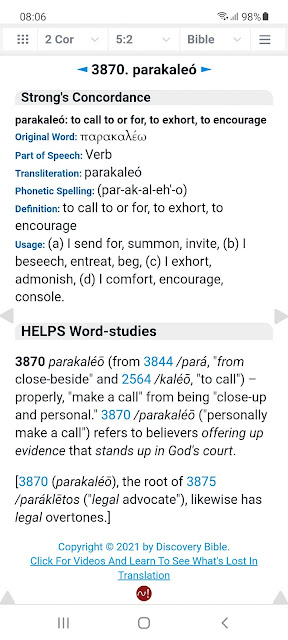
What is interesting is the agency of the outcast or marginalised man. The word my English translation renders ‘begging’—a word that draws out an emotion of disgust and thoughts of shaming, in my cultural context—combines the Greek words to come close-beside someone and to testify to their character and actions. It can be used as a word to describe encouraging someone or admonishing someone.

The leper comes close beside Jesus, to reveal something about him. What this man acts to reveal is that Jesus is both willing (a question of desire) and able (a question of power) to cleanse him, to address the (albeit temporarily necessary) injustice of his isolation from human touch. The desire and power of the leper reveals the desire and power of the celebrated man Jesus.

That is fascinating and exposes our assumptions of where will (or desire) and the means to act on that will (that is, power) lie.

Regardless of our social standing, we can exercise the will and the power to come close-beside someone else to admonish or encourage them, by witnessing to their will and power to do good, or their refusal to respond with such compassion.

We can stand with others, or at a distance. We can empower others or keep power for our own self-interest. We can move to restore others as quickly and fully as possible, preferring them before ourselves—even at cost to ourselves—or not. We can participate in human dignity, or by our actions send ourselves into exile.


Monday, December 13, 2021

Under pressure


I’m not a fan of F1—and I’m not interested in getting into a debate with those who are—but I heard a brilliant analysis of yesterday’s controversial end to this year’s championship, by David Croft, lead commentator for Sky. His view was that, under incredible pressure—not simply the pressure of the title race, but the burden of having kept the show on the road all season under pandemic conditions—race director Michael Masi made the wrong call. But, rather than vilify him, we should recognise that the burden is unacceptable; that this must not happen again, for Masi’s sake as well as for the sport; that the owners of F1, who make a lot of money from it, should provide Masi with a deputy to work alongside him. Croft also noted that Verstappen is a worthy champion, but that he should not have won in the way that he did—that was unfair on him as well as on Hamilton—and that the gracious magnanimity of Hamilton in congratulating Verstappen should silence his own critics—he, too, is a worthy champion of champions.

As I say, I am not a fan of F1. But I found Croft’s analysis incredibly important. Everyone who is working is working under a massive additional burden, under pressure to deliver business as usual in circumstances that are far from usual. At every level and in every sector, we are stretched to the very limit—sitting ducks on worn tyres, if you will—and under such conditions, extended over time, errors of judgement are inevitable. Some of which will have greater consequences than others.

We need to extend grace towards one another. Far more than we do. And the grumpier we all get, living with the pandemic, the more we need this.

We need to consider scaling down what we expect, at present—what we can deliver, and what we demand from others. We aren’t past this, or anywhere near past this.

And we need to have serious conversations about investment. In a society where the only value is money—where what is ‘good’ is profit (and wealth indicates virtue) and what is ‘evil’ is any constraint on profit (and not possessing more money than you can ever spend is seen as vice) and where all other values have been hollowed-out—we need to reconsider wellbeing in terms of the common good. What does it profit us if we grasp material riches, but forfeit our soul?


Tuesday, September 14, 2021

Ethics


Yesterday, the UKs four Chief Medical Officers (CMOs) recommended that children aged 12-15 be offered one dose of vaccine for coronavirus. If the Government decides to be ‘led by the science’ this will probably be delivered through schools, with parents being asked to give consent, but with the child having the determining say.

Some argue that this is a dangerous precedent, a removal of parental rights by government. In fact, this is nothing new, but it does highlight the importance of ethics in society. In this instance, a decision is made on the basis of interaction between the considered advice of experts, the deliberation of elected representatives, the parental responsibility for immediate duty of care toward their child, and the agency of the young person.

Secondary school aged children are well placed to be actively involved in this decision (and perhaps better placed than their parents). They are learning how to interpret arguments in English, and evaluate sources for propaganda in History. They are learning about bio-chemistry in Science, and probability in Maths. They are learning about ethics in Religious Studies, and how their decisions impact others in Personal and Social Development.

Teenagers are also impulsive, change their minds, bow to peer pressure, and experiment with drugs. They need, and should be able to expect to have, checks and balances in place (such as those that already exist on parental consent forms, where consent may be given, or withheld, with reasons given).

What 12-15 year olds need from their parents is parents who will recognise and affirm their agency; support them in making a decision for themselves; and continue to support them in the long-term consequence of that decision.

Clearly, not every child has parents who are willing or able to do that for them. Not only parents who don’t take responsibility, but also those who take too much; parents who believe that they know better and are acting in the best interests of a child who cannot see it yet because they are not an adult. You’ll find such parents across every demographic group by which you might sub-divide society.

Sometimes the rights of children overrule those of parents, and it is important that there are regularly reviewed due processes for determining this.

Ethics is a process of dialogue, that calls on us to listen attentively and care-fully—that is, having care for the person we are listening to—and speak courageously. It is a conversation in which no-one has the last word, because there is no last word. Where even when a child’s decision overrules that of their parent, the conversation must carry on: child and parents supported to be a family; families and Members of Parliament and experts in all manner of fields supported—supporting one another—to be a healthy society, able to face complex challenges.


Monday, September 13, 2021

Remember


There’s some kind of conifer growing outside my kitchen window, one can almost imagine being on the edge of a forest (there is no forest) and, standing at the kitchen sink this morning, it triggered thoughts of childhood holidays.

My childhood holidays, visits to grandparents in the southeast of England aside, were spent in Scottish villages, in the homes or bolt holes of friends of my parents. Port William, on the southwest coast; Corpach, just outside Fort William in the west Highlands; and Brora, on the far northeast coast.

I don’t remember how many times we stayed in each place. I can recall one memory from each. Finding a dead dog fish washed up on the beach at Port William. Tadpoles in the bath at Corpach, the peaty-brown water fed directly from a burn (stream) that ran through the property. Buying an Airfix model of a WWII vehicle in the village shop at Brora and constructing it. That’s it. That’s your lot.

As we emerge from the travel restrictions of the past year and a half, holiday destinations and agents will put pressure on parents to make ‘priceless’ holiday memories for their children. I recognise that I am not neurotypical, but nonetheless I suspect that for the most part such memories are not stored in destinations we revisit.

The purpose of a holiday is not to make memories (though that may be an added bonus) but to spend time together in the present moment. It doesn’t really matter where you do that, or what your budget is.


Saturday, July 24, 2021

Surprised by joy


Silksworth parkrun ends with a long, steep bank. For some, it is a killer, having already run four-and-a-half kilometres. But for quite a few, something happens at the bottom of that bank. Knowing the run is almost done, their hearts rise to the challenge. With renewed vigour, they take it in their stride. We used to start and end half-way up that bank. Today someone told me that they used to find that a killer; but that they had never found having to run the full way as hard, and I agree (I think not starting up hill helps).

Today, we were able to return to parkrun, after a break of a-year-and-a-half. Around 160 runners and volunteers turned out. And it was joyful. Joy, written on the smiles and, in some cases, tears, on 160 faces. And for me, the joy of being able to welcome them back, as Run Director this morning. As I surveyed the scene at the finish, I was deeply thankful.

Joy is the emotional response to wellbeing, and also to the realization of desire. When we experience wellbeing, our hearts lift up, are strengthened, and overflow. Joy enables us to face the challenge—to get up that bank—for wellbeing is not the absence of challenge, but the presence of harmony, within ourselves and among a group We all need to experience joy, not least in the face of ongoing challenges, and today, at parkrun, we did.

This joyful response is not a throwing of caution to the wind. The return of parkrun has been the culmination of many long months of careful planning, of implementing adaptations to practice in order to make the event as secure as possible. And it was great to see everyone embrace that today, marshals and runners alike, all playing their part in keeping one another safe—wellbeing: harmony between people in a community.

If you need some joy in your life, you might find it walking, jogging, or running 5K at 9.00 a.m. on a Saturday morning.


Monday, July 19, 2021

Sons and daughters


Today, the mandatory measures introduced for the common good in a pandemic are lifted in England, becoming a matter of personal choice.

The Old Testament reading set for Morning Prayer today is Ezekiel 14:12-23. In it, God sets out four possible consequences that a nation might bring upon itself by acting in bad faith according to God’s concern for the land, the poor, the most vulnerable, and the foreigner. These consequences are listed as famine, being over-run by wild animals, sword (war), and pestilence (epidemic). In each circumstance, God invokes the names of three characters from ancient mythology known for being righteous, or living in right relationship with their neighbours, against a backdrop of widespread self-interest: Noah, Danel (not the biblical figure Daniel, despite the English translation), and Job. Even if these righteous individuals were found in such a land, God says, they would save only their own lives, and not be able to save others, even the lives of their children.

Then God asks, and what will happen when my chosen city of Jerusalem brings judgement upon itself? Here, God’s own righteousness will extend to sparing sons and daughters, and these will be spared by their being carried off into exile, a second wave joining the already-exiled community of which Ezekiel belongs.

What of my people, today? Our bad faith has brought about catastrophic climate change, weather patterns that are now impacting even the wealthy West; has brought about a new mass extinction; has sold weapons and sown instability across in particular the Middle East. All these things have exacerbated human migration, people seeking asylum, which will only increase in the coming years; yet at this very time, we have turned our back on our neighbours, cutting foreign aid and making it illegal to seek asylum (something guaranteed under international law). And today, in a pandemic, we take steps that threaten to destabilise the global course of this disease.

What future, for our sons and daughters? Perhaps, as before, exile is their only hope.

Lord, have mercy.


Thursday, July 08, 2021

Control


Today’s Old Testament reading at Holy Communion is taken from the long Joseph cycle that forms the climax of Genesis. Years before, Joseph’s older brothers have trafficked him into slavery in Egypt. For years since, they have allowed their father to believe that his son was killed by a lion, to exist in a fog of bereavement for a child he could not even lay out and wash clean and lay to rest. They have saved their own skin, at the cost of a gnawing away at their very souls.

Meanwhile, by a convoluted route of misfortune and chance, Joseph is now second only to Pharaoh, and administering grain in the middle of a global famine. His brothers, slowly starving, travel down to Egypt in hope of salvation, and Joseph recognises his betrayers. And to begin with, perhaps to buy himself some time, he plays a game, of exercising control over them as they had done over him. This goes on for some time, the brothers even now, in crisis, unable or unwilling to come clean to their father.

The situation only moves on when Joseph gets to the point when he is no longer able to keep control, even the pretence of control. He breaks down, in private, in front of his brothers. It is messy. Tears, snot, the works. As painful for them, albeit for different reasons, as for him.

And then he invites them to enter-into the place of not being in control. Yes, he instructs them to come closer; but he has no idea what they will do. The last time they came close, they threw him in a dry cistern to leave him to die. And the brothers respond, stepping out of control, not knowing whether Joseph will take his revenge.

Instead, Joseph declares that God sent him ahead of them, to preserve life. God, the eternal child, who has no need for control, but chooses in every circumstance to work for the preservation of life, in order that, though it might not be flourishing in the present moment, life might flourish again.

Our almost-fifteen-year-old son went to school today, for only the fifth time this calendar year. He has not engaged with online learning; this is as much as he has been able to face. He is one of the over 30,000 children who were going to school before the pandemic, who have felt unable to return during it. School have been brilliantly supportive. But we, his parents, have a legal responsibility to get him to school, and we are entirely unable to get him up in the mornings. He is exercising the only control he can, in the face of the chaos of a pandemic in which school has been disrupted by whole cohorts being required to self-isolate over and over again.

Young children have no need to be in control, unless some trauma forces it upon them. But adolescents seem to have a need to take control, of some aspect of their life, if only in order to learn that none of us are in control, however hard we pretend. And we can pretend to ourselves for years, a lifetime even.

It is a necessary step, from dependence to interdependence. The breakdown of our attempts to be in control, the point at which we might discover that God is present in our lives, all our lives, for the preservation of life. This is the reason why this moment comes as we build to the climax of Genesis, for it is the end point of our beginning.

In the long-term, he will be fine. And in the words of Julian of Norwich, ‘All shall be well, and all shall be well, and all manner of things shall be well.’ For now, we get to bear witness to a goodness he cannot see, and resist our own temptations to take back control, that we too might know God preserving our lives.


Thursday, June 10, 2021

Glory


‘Indeed, to this very day whenever Moses is read, a veil lies over their minds; but when one turns to the Lord, the veil is removed. Now the Lord is the Spirit, and where the Spirit of the Lord is, there is freedom. And all of us, with unveiled faces, seeing the glory of the Lord as though reflected in a mirror, are being transformed into the same image from one degree of glory to another; for this comes from the Lord, the Spirit.’ 2 Corinthians 3:15-18

We heard these words read at Holy Communion this morning. A little later, the sun itself was eclipsed by the moon passing between us.

Whenever Moses spent time in God’s presence, his face shone, both reflecting and sharing in the weight of God’s luminous glory; and when he then walked among his neighbours, he covered his face, because they could not bear the weight of it.

I imagine that over the past year-and-a-half, many of us have become accustomed to veiling our faces behind a mask. And a great deal of weight has been laid upon Monday 21 June as our ‘Freedom Day.’ In recent days there has been a stirring-up of wrath, that the UK Government is preparing a ‘new narrative, “data, not dates”,’ to justify delaying Freedom Day by a couple more weeks. But the narrative has always been ‘data, not dates’: that the remaining restrictions would be lifted no earlier than 21 June, not necessarily on 21 June. Whatever takes place, 21 June is not my Freedom Day; every day is freedom day, for, where the Spirit of the Lord is, there is freedom.

Masked or casting masks aside, we are invited to see the glory of God reflected in the face of all creation—including the majestic sun, veiled, momentarily, by the moon that reflects its light in so mesmerising and winsome a manner—but nowhere more-so than in the faces of human beings. For those with eyes to see, that glory, partly hidden and to some degree distorted—as is the way, with light—is nonetheless visible, in you, and me, in the face of everyone we meet. For all are made in the likeness of God, and the Spirit of God is being poured out on all flesh, inclusive of age and gender and ethnicity.

So, shine. And worry not if your face is covered, whether by a mask out of love for your neighbours, or a dark cloud passing overhead. I see you. And you are glorious.


Tuesday, November 03, 2020

Torn


Today, the Archbishops of Canterbury and York and the Bishop of London have joined other faith community senior leaders in calling on the Prime Minister to make a U-turn and allow public worship to continue in the second, coming lockdown.

I am utterly torn by this, as to be fair I am sure they are too.

On the one hand, I agree with them that faith is not a private matter; that our places of worship are ‘Covid secure,’ with no scientific evidence that the virus is being spread through public worship [though, we have no means of collecting such evidence]; that there is research-based evidence supporting the positive benefits to mental and emotional health; and that our corporate worship is significant in sustaining our service to the wider community at this time, through for example, food banks, or any of the £12bn worth of social value contributed by the Church not counting the support offered by other faiths.

On the other hand, these things are not exclusively true of faith communities; special pleading undermines solidarity, in deeply damaging ways; and I do not believe that public worship is essential to what constitutes and sustains us. If that were so, one could not speak of the Church in China, or Iran.

Christian faith, like Judaism, is grounded in love of God and neighbour, with special attention to justice and mercy. Both traditions stand on prayer and service of our fellow human beings in the mending of a torn world, and these things can be done in the temporary absence of public worship. And from a specifically Christian perspective, it is the person of Christ, through the Holy Spirit, who constitutes and sustains us, not our ability to gather together.

Islam is also rooted in prayer and a concern for one’s neighbour, and while corporate payer is foundational, it too recognises that circumstances may exempt believers from certain practices. Indeed, all faiths have had to adapt to circumstances, throughout history. And we are living in a pandemic that is uncontained.

I am torn, also, because it is exhausting to have to form and hold parallel plans: for gathering in one physical space; and for gathering in time held in common but across various spaces. This week is exhausting.

None of this is to criticise the senior Church leaders listed above, nor in search of pity for a poor vicar, but, rather, a recognition that life is often and for many a torn reality. To give just one other example, this will be true of many voting in the USA this November.

How, then, ought we to live? Firstly, by acknowledging that this is so, including creating safe spaces to express the pain of it all, to lament.

Then, by seeking to be gentler, with ourselves and towards others. Recognising that those days when we can operate at fresh-out-of-the-box full capacity are not the default days against which we should measure expectations, but gifts to be enjoyed when we do experience them.

Finally, to recognise that different people will hold different views and reach different conclusions; that this will always be the case, and it does not make them—or us—villains; but it does add to the complexity of life—which, in turn, brings us back to lament and gentleness.


Tuesday, October 06, 2020

Unclean


There’s a story in the Gospels of a woman whose severe gynaecological bleeding (or possibly haemophilia) has kept her isolated from community for twelve years. She is ritually unclean, which is to say, removed from society, with anyone who touches her also having to remove themselves from society for a short while.

This ritual removal was part of the regular rhythm and flow of her culture. Women would remove themselves in the monthly cycle of their period. Ritual uncleanliness is not sinfulness, or moral failure, and ritual cleansing is not sin management or the management of the Other; but, rather, to participate in ritual uncleanliness and ritual cleansing is to enter into the pattern of death and new life, to be an actor in deep mystery. Every one of us, regardless of sex, age, or culture, regardless even of introvert or extravert preference, needs regular times of withdrawal from and restoration within society. But for this woman in this story, the withdrawal had been extended out indefinitely.

We know that she has spent all of her resources on physicians who were unable to cure her. We know, therefore, that she has felt human touch, and under the most vulnerable of conditions. But it is quite possible that she had gone for months at a time between experiencing human touch, for years. We do not know, but it is possible that she had family members who, in order to provide such touch, essentially self-isolated in order to shield her; even so, she is removed from her neighbours. Given that we know she had spent all her resources on the hope of a cure, and that she was still alive, we may imagine that one or more of those neighbours left food on her doorstep, in a spatially distanced compromise they had to make work.

All of this seems meaningful, in 2020.

This woman hears that Jesus has arrived in town, and resolves that if she can push through the crowd, unnoticed, and only touch the hem of his garment, she might hope to experience the healing she needs, the kind of healing she has heard that others have received from him. And so, she takes the risk. She, surely, makes others ritually unclean by her contact. She reaches out for Jesus. And straight away, he is aware that power has left him. And straight away, she is aware that she is healed. And Jesus responds in such a way that everyone, who have just been made ritually unclean, is ritually cleansed. The whole community goes through death and new life (which is really interesting, because Jesus is in fact, at this very moment, on his way to raise the daughter of the ruler of the synagogue from death).

How do we go about our lives under the tension of needing to interact with people who are mutually exposing one another—and by extension others who have not chosen so to meet—to risk?

How do we live with the very real emotional and psychological impact of the extended loss of human touch—and the added impact on those who are removed from the possibility of touch, but nonetheless must look on as others break the rules?

How do we nurture empathy and compassion for those most affected by isolation, over extended time that erodes our empathy and compassion?

Where might Jesus, and the community gathered around him, feature in our thinking?

How might the story of this woman help us?


Saturday, October 03, 2020

Comfort and Joy


2020 has been a hard year. The Church of England’s theme for this Christmas is Comfort and Joy, recognising that this year Christmas will be, for many, a strange mix of the numbness of loss and the longing for that celebration of love that strengthens our bones in midwinter. Jo and I would like to share some Comfort and Joy by giving every home in our parish a bespoke bauble, to create a community-wide Christmas tree, in our homes and also hopefully curated online. As we look to bless our neighbours, we have asked a local business to make the 7,000 baubles for us, and they look great.

Here’s how you can help.

[1] Could you donate to our Just Giving page, to help us cover the cost? The link is https://www.justgiving.com/crowdfunding/comfort-and-joy

There will be some additional costs (printing of an explanatory flyer; possibly ribbon) but our target of £1,750 relates to 7,000 laser-cut baubles at 25p each.

[2] Do you have any ribbon you don’t need and could give to the project? It needs to be 15-20cm lengths, between 3mm-(max.)10mm wide.

We know that many of you might have some ribbon saved for a project you’ve never got around to, or even the hanging loops from a dress or top. Here is another way to get involved. We need 7,000 strips in all, but every contribution helps, however small. Any colour will do, especially if Christmassy. If you are further afield, you could post them to us—message me for our postal address on andrew [at] dowsetts [dot] net if you need it—and if you are local, you might even be willing to thread some of the baubles for us?

[3] Local friends, would you be able to help deliver baubles door to door, later in the year? Let us know!


Sunday, May 31, 2020

Pentecost


Pentecost

O happy Pentecost:
novel coronas of light,
spread from face to face, left
3,000 dead to self and rising
in Christ
in just one day;

down town ablaze
with flames consuming every
tribal division, and
drawing diverse shades
into one harmony:
may it be so in our day, too.

Wednesday, May 27, 2020

Reframing the narrative


This morning I read a long and detailed letter written by a Conservative MP exonerating Dominic Cummings.

The letter reframed the narrative, from a public health crisis to a personal story in which Mr Cummings is the victim of unfair attention; and, moreover, in which others coming to a different conclusion is merely a private matter.

Reframing the narrative is how it works.

Just as whenever a black man is killed by a white man in the US, people are quick to reframe the narrative away from injustice, and indeed endemic systemic racism: clearly there were justifiable reasons that have yet to come to light; the white man felt threatened, and is entitled to defend himself.

Always attend to who reframes the narrative, and to what end.

Stay alert. [Control the virus.] Save lives.

Tuesday, May 26, 2020

For the record


For the record, thoughts originally posted on Facebook over the past 24 hours:

-----
Yesterday, the Prime Minister mistakenly identified the public mood as confused. Today, Dominic Cummings rightly named it as anger, and as justifiable anger, but claimed that it is misdirected anger: we are angry because we have listened to inaccurate reporting by the media, and so he would put the record straight.

I choose to take his statement concerning what he did and why he did it at face value. I have sympathy for him. And I remain dismayed that he is unrepentant.

At a time of national crisis, he, the architect of government policy, failed to do his civic duty at the first hurdle. He then used the hurdle to justify his failure; broke both the letter and the spirit of the law; and blamed the media for reporting a story in the public interest without full knowledge of the facts in the face of dissembling rather than transparency from 10 Downing Street.

What was asked of us is clear, regarding the self-isolation of those who have C-19 symptoms in their own home at which they were resident at the time, and the quarantining of all household members. Rightly, an exception was made for any parent who came down with such symptoms and was living with a violent partner, who feared for the welfare of their child not because of coronavirus (which appears to affect children differently) or hunger (thousands of people have signed up to deliver food to isolating households) but because of domestic violence. This provision meant that the police could not prevent anyone in such circumstances from leaving their home, nor could local councils or shelters turn them away on account of their condition. Sadly, circumstances across the nation have shown that this exception was and is needed. But Cummings has broken both the letter and the spirit of the matter.

There is no shame in not having the strength of character to deal with a national, indeed international, emergency. None at all. But to not see it is a tragedy. And a missed opportunity that stores up future tragedies. And to not have friends around you who can help you to see that is perhaps the greatest tragedy of all.


-----
Today, several bishops of the Church of England have received threats, ranging from people threatening to leave the Church to death threats, for criticising the government. Including quite literally at least one member of the House of Lords being told to stay out of politics, or it will be the death of you.

If you feel so strongly that the Church should remain quiet, then please do go ahead and leave. It is a free world, and we are not a private members’ club.


-----
STAY AT HOME > PROTECT THE NHS > SAVE LIVES

We were explicitly told not to travel to quieter parts of the country to self-isolate, in case, should we become ill, we place an additional burden on local hospitals.

By his own account, Dominic Cummings’ London-based family had to draw upon the resources of a Durham hospital.

The government are mocking the people.

The Conservative Party has a very large majority in parliament. We need to see a very, very significant back bench rebellion. Public silence speaks to the character of every MP.

So far we have heard a few brave voices. This morning, a junior Minister has resigned his post in protest. May this be the beginning.


-----
In the light of the Dominic Cummings affair, I want to reflect on Jesus’ instruction that whoever is without sin cast the first stone (John chapter 8).

The first thing that I note is that Jesus was responding to a group of powerful men who were calling for someone to be put to death. To my knowledge, no representative of the Church of England has suggested, on or off the record, that Dominic Cummings be killed for what he has done; but that he be removed from his post. I am, however, aware that several Church of England bishops have received death threats for speaking out against the government; which is a consequence of the populism Dominic Cummings has carefully cultivated.

The second thing I note is that Jesus fronts down a group of powerful men who have broken both the letter and the spirit of the law.

They claim that the Law of Moses demands that this woman, caught in the very act of adultery, be stoned to death. This is a subtle, or not-so-subtle, revision. The law was understood to instruct that, under certain circumstances, a couple found guilty of adultery be put to death; but they have not brought the man to justice. They have broken the letter of the law.

Moreover, they have broken the spirit of the law. The spirit of the law is concerned with the need a society has for trustworthiness, truthfulness and integrity; and that, for the sake of the common good, those who believe that the law does not apply to them are not accommodated. As far as we can tell, in Jesus’ day, the spirit of the law was enforced far more than the letter. However, in bringing this woman before Jesus, these powerful men are abusing the spirit of the law in order to score points against him.

Of course, the woman has also broken the letter and the spirit of the law, another part of the law, the law prohibiting adultery; and, again, Jesus calls her to repentance.

The third thing I note is that Jesus begins to write, in the public space in which all this is unfolding. We don’t know what he writes, but we do know that he keeps writing until every last powerful man who thought that it was a good idea to associate themselves with this travesty have realised that their position is indefensible, and conceded as much in public. Only then does Jesus stop writing.

The fourth thing I note is that Jesus didn’t go looking for this confrontation, but neither did he ignore it. I have far better things to do with my time, caring for hurting people living in previously unimaginably hard circumstances, than use the written word to shame powerful men who show a disregard to the letter and spirit of the law at the cost of others. But, for the sake of those people I am called to serve, and following the example of Jesus, I can’t ignore this.

Were I to do so, I would in effect be adding my own metaphorical stone to the pelting of already hurting people.

Saturday, May 23, 2020

Mental Health Awareness Week, day 6


The wind is wild today, whistling tunelessly through the fixtures and fittings of the house. Part of me wants to hunker down until it blows itself out; part of me has already had enough of hunkering down.

The wind makes my wife feel anxious, she says; reminding her of all those camping holidays when we have wondered whether the tent would be torn away from us*. It makes me feel sad, though I cannot put my finger on why, and perhaps I am mistaking anxiety for sadness; but while clarity can be helpful, sometimes it is more helpful to resist the temptation to probe deeper.

Mental health includes the full range of (basic) emotions and (in response) feelings and thoughts, in the present moment and tapping into our shared histories, some fleeting and others more enduring. This is mystery, both universal and of great diversity, that draws us out from ourselves and closer together with our neighbour, and our Creator.

I cannot stop the wind from blowing. I cannot even, by direct effort, rewrite the script of how I respond. But I can choose to foster—by degrees, and as much as I am able—a reverent wonder for that response, and for that of others. You are a miracle, a holy mystery; and so am I. Wild; and, sometimes, tuneless.


*Including the time when she spent a sleepless night in Aviemore while I slept, having seen a vision of Jesus or an angel sitting in the tent, but failing to tell Jo ... the time at Clachtoll when the site manager came to ask if we would like to spend the night in an empty static caravan ... the time, taking down our trailer tent at Dunstanburgh when the wind filled the great sail of canvas and twisted and snapped the metal frame beyond repair ... and other times, none of which have prevented us from going camping again.

Friday, May 22, 2020

Mental Health Awareness Week, day 5


The car hasn’t been out much since Jo started working from home, though, whenever it has been possible, she has ferried me to and from the crem. On one outing, to drop off donations at the food bank, on turning the ignition a warning came up on the dash display: the pressure in the front right-hand tyre was about half what it should be. We got a quick and dirty fix at a garage. It didn’t hold. More than once, Jo pumped the tyre with air: outside the crem, using the onboard pump, as we waited for the hearse; and at the machine at the petrol station. Each trip we made, the tyre pressure had dropped again. In the end, we had it and the valve replaced, by a different mechanic.

Yesterday, I was having a conversation with a friend. It went like this:

“I’m struggling with motivation to work ...”

“Hmm, motivation (or loss thereof) is hard, isn’t it? ... What would, ordinarily, motivate you?”

“That’s just it. I feel like a leaking tyre ... Not sure what would work.”

I was struck by his choice of words: like a leaking tyre. On reflection, that feeling seems to me to describe grief. And all the more-so because there is no ‘obvious’ bereavement.

On Monday, I wrote:

“Grief is an active process that involves engagement with the tasks of accepting the reality of our loss; processing the pain; adjusting to a world without what we have lost; and finding an enduring connection with what has been lost in the midst of embarking on a new life.”

These tasks aren’t strictly sequential, but, to be clear, none of us have really even begun to make a start on the fourth. It is too soon. But, we are all experiencing bereavement. The loss of physically present co-workers. The loss of personal space, if we are living 24/7 with children who are not going out to school (or even, outside the house). The loss of a host of conveniences we took for granted. The loss of assumed certainties. This, to name but a few.

And accepting, processing, and adjusting are exhausting. But, often, they exhale us like a slow leak. We aren’t conscious of the tiny cracks, but each time we go to set out on some activity or other, we find ourselves deflated.

People are not tyres; but, by way of the analogy, quick and dirty fixes won’t hold. Moreover, we can inject air—can receive support from others, and enjoy life-giving moments—but even that won’t be lasting. Eventually, we can expect to emerge from the process with a new tyre, an adjusted life. But it takes time.

In the meantime, we are where we are. And that will be lacking in motivation (as I have to keep reminding myself, as I watch my sons’ lack of motivation). Motivation is in part concerned with productivity, and you are not a machine: you were made to be fruitful, but only in time with the seasons of your life. It is also, in part, concerned with legacy, and you might need to find new bearings in a new world before you can offer that.

But, for now, lack of motivation might mean that at times we need to say, “Please forgive me, I have not been able to do what is expected of me.” And that at times we need to reply, “Of course we forgive you. Now, how might we bear this burden together?” In other words, as we collectively experience multiple bereavements, we need to be kind, to ourselves and to one another.

Thursday, May 21, 2020

Mental Health Awareness Week, day 4


The mask. I am taking another funeral today, and, while I won’t be wearing a mask while I do, I shall be wearing it while taking a taxi to the crematorium.

On my twelfth birthday, I had an encounter with a demonic presence, external to myself, that tried to control me to take my life with a jungle knife hanging on the wall of the room in which I found myself, alone. Clearly, it was a struggle I won. But the old adage ‘whatever doesn't kill you, makes you stronger’ is merely wishful thinking. The encounter broke me, and my mental health was not great throughout my teenage years. I suffered from a depression that was particularly bleak around the time of my birthday. Seasonal, cyclical.

When I was seventeen, in a hostel in the middle of a forest on a church youth fellowship weekend, I had a second breakdown experience. This one precipitated a two-year journey of recovery of mental health, a process that involved the support of some wonderful friends, a child psychologist, my GP and the medication she prescribed, and finally a vision of Jesus.

In the vision, I was curled in a tight ball on my knees, confined in a space only just big enough for me, in a darkness so black I could not see. After a while, I became aware of the presence of Jesus, sitting, cross-legged, beside me. Just sitting there. After a long time, he got up, reached out his hand, and said, “Come on, let's walk out of here.” And we did, together. As I got up, I discovered that the cage that had held me was not there. Whether it had only ever existed in my imagination, or whether it had fled in the presence of Jesus, I do not know.

I would not wish my experiences on anyone else, and yet, I would not trade them, because, as a result of what I have experienced, I have been able to be used by God to bring hope and healing to many others. And this is my testimony: that shit happens, but that God uses it as fertiliser to grow beautiful roses.

There have been other times in my life when I have experienced low mood. One such time was when I went through the discernment process for ordination. I was open about my history of teenage depression—why should I be ashamed?—and of the ways in which God had used that to help others—for, as I discovered, mental health issues are extremely common. For my pains, I was sent for assessment at The Priory, a private clinic in London and famous rehab centre for celebrities. They gave me a clean bill of health (indeed, they apologised that my time had been wasted in being sent to them).

I don’t need to talk about my history that much. It isn’t that I wear a mask to conceal it, but that, being well, I do not need to wear a mask. I am not going to infect you, nor am I fearful that your potential mental ill health will infect me. Mental health isn’t like the novel coronavirus. So, while I shall be wearing a cotton mask in the taxi today, I would simply say, it is so much easier to breathe without one.

UPDATE:

I have been both honoured and humbled today (the two were always intended to go together, and in their true form, do) by the ways in which my story has given hope to others.

But I want to make a plea about the language we use: honesty, yes; integrity, amen; but, it is not brave to tell your story, just as it is not cowardice to not be ready to tell your story.

We all tell our story to the extent to which we have received a measure of healing and wholeness, and no further.

In the context of mental health, that might mean remission, or even cure; or, it might mean that you have found a level of genuine acceptance and been able to tell an integrated story of your identity.

I have not always been able to tell the story that I told today. And there are parts of my story that I am still not prepared to tell, because I am not prepared to deal with the consequences for myself or for others. This is not dishonesty, but, I trust, discernment. Perhaps one day I will be able to tell those stories. Perhaps I won’t; and, at the end of the day, I don’t think it will matter. My story is known to God—indeed more fully and honestly than it is known to myself—and it is God who will tell all our stories with perfect mercy and justice.

But there is no shame in still being in the process of being healed—and where we feel shame, there is cleansing to be found in the compassion of Jesus.

The mask I wore today covered my nose and my mouth, but left my eyes (and my increasingly Rowan Williams-esque eyebrows) visible to the world. So it is with our stories. Tell your story as fully and honestly as you are able. But don’t apologise for where it is for the best for all concerned that, for now, your face is partially hidden.

Be wise. Be kind, to yourself and others.

Wednesday, May 20, 2020

Mental Health Awareness Week, day 3


Today is a breathing space for me, and this morning I went for a run. Running has been good for my mental health in many ways, including spiritually, physically, and socially.

Yesterday I noted that we can speak of each human being as having three Selves. This, I believe, is part of what it is to be made in the likeness of a triune God: the Father, I AM, eternally dwelling in the present and inviting us to be with him there; Jesus, the Son, who has an embodied history, from birth through childhood and adolescence to adulthood, suffering, death, and beyond; and the Holy Spirit, whose harmonising activity in the world is socially dispersed.

When I run, there are times when I find myself—Self 1—caught up in the present moment. Whatever concerns I took with me, whatever problems I turned over in my mind, attempting to multi-task, fall away. Not every time. And in this present moment, I know that I am, and that, whatever state I am in right now, I am beheld by the loving gaze of Yahweh, I AM.

When I run, I find myself—Self 2—aware of my body. I am not as young as I once was, nor as old as I hope to become. Today, my back is moving more freely than it has for several days, but not yet as freely as I have known it and hope to know it again. Having been unable to run for a week, to get out today and move, to feel the warmth of the sun on my back and the sting of sweat in my eyes, has been good for me. A blessing, to give thanks for--and to share in greeting others out for a walk in the sunshine.

When I run, I find myself—Self 3—a part of a community of runners. At present, we are unable to run together, as we would like. But I have been so very blessed by the ways in which fellow Strollers have taken to connecting via Facebook and Messenger. When I run, even if I do not cross paths with another member of the club, I do not run alone. We run, for one another as well as for ourselves, holding on to the times we have run together and to the hope that we shall do so again. And on some days, any given one of us is not up to holding on to such hope, and so we are held by one another. Mental health—indeed all health—is social, because it is personal, and persons only exist in relation to one another.

Of course, running is not a magic talisman. There have been times when I have had to put it down, because my head has been broken. It has been there, my friends waiting for me, when I have been able to pick it up again. Nonetheless, I am thankful for the Sunderland Strollers, the best running club in the world (possibly best equal, but I could not say). They have been and are one of the ways in which God is saving my life, right now.