Pages

Sunday, December 10, 2006

Advent 8


The airspace over the Christmas Story is congested with angelic flight paths.

Old uncle Zechariah encounters an angel (Luke 1), and, gripped with fear, foolishly argues the toss with him…
Mary encounters an angel (also Luke 1), and is troubled by his message.
The shepherds encounter an angel (Luke 2), and are terrified. And that before they encounter a whole army of the heavenly host!

And then there is Joseph. Joseph encounters an angel not once, not twice, but four times (Matthew 1:20-24; 2:13; 2:19-20; 2:22-23). And he does so without batting an eyelid (metaphorically, at least; though as Joseph encountered his angels in the throes of REM sleep, his eyelids probably did flutter).

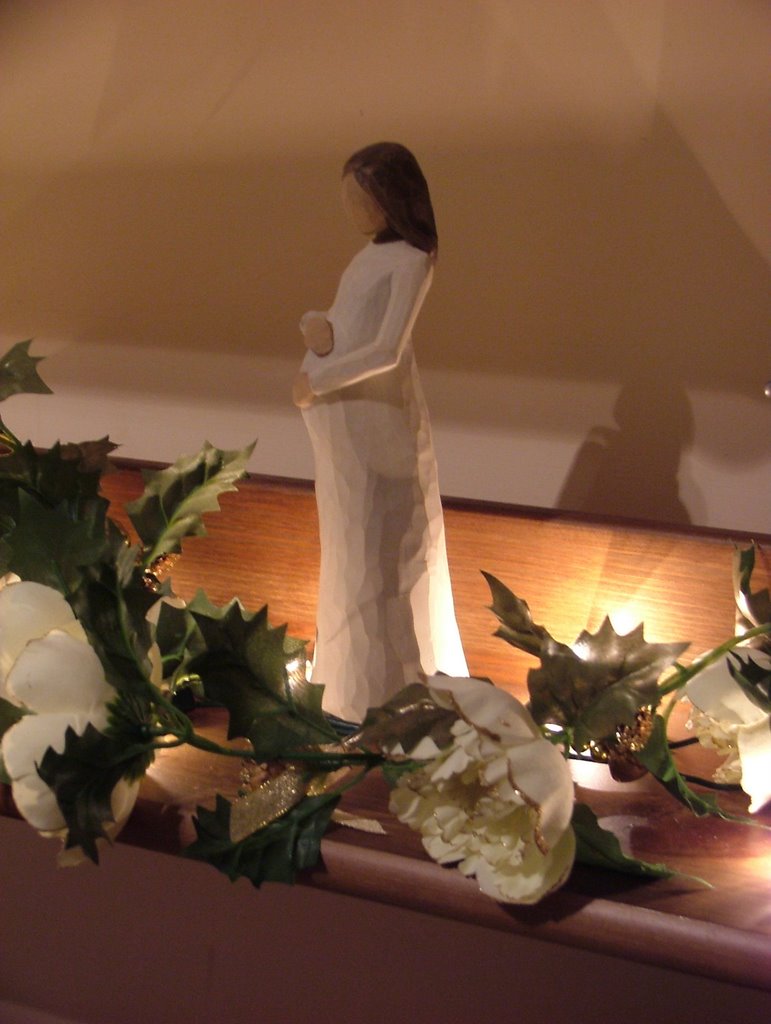
Joseph: the chippie, the builder of wooden-framed houses. Round ’ere, ’e’d be a brickie: belly hanging over his belt at the front, crack of his bum protruding from above his jeans at the back. Conversing wi’ angels as if wi’ t’ site gaffer; entrusted by God Almighty to raise His only Son…


Saturday, December 09, 2006

Advent 7


…God sent the angel Gabriel to Nazareth, a town in Galilee, to a virgin pledged to be married to a man named Joseph, a descendant of David. The virgin’s name was Mary. The angel went to her and said, “Greetings, you who are highly favoured! The Lord is with you.”
Mary was greatly troubled at his words and wondered what kind of greeting this might be.

(Luke 1:26-29, New International Version)

God’s messenger turns up in Nazareth, and declares “The Lord is with you!” And Mary finds this troubling, proceeds with caution…

God’s messenger turns up in church, and declares “The Lord be with you!” And the congregation responds “And also with you,” before plunging headlong into liturgical business-as-usual…

Perhaps we have domesticated God’s presence, become over-familiar with his being around…
Perhaps we have discarded God’s presence, become over-familiar with his absence…
Whatever it takes, for an easy life…

Lord, if we too have found favour in your eyes, trouble us in our complacency towards you. Amen.

Friday, December 08, 2006

Advent 6

When the angels had returned to heaven, the shepherds said to each other, “Let’s go to Bethlehem! Let’s see this thing that has happened, which the Lord has told us about.”
They hurried to the village and found Mary and Joseph. And there was the baby, lying in the manger. After seeing him, the shepherds told everyone what had happened and what the angel had said to them about this child. All who heard the shepherds’ story were astonished, but Mary kept all these things in her heart and thought about them often. The shepherds went back to their flocks, glorifying and praising God for all they had heard and seen. It was just as the angel had told them.

(Luke 2:15-20, New Living Translation)

The Christmas Story is all about journeys.

There’s the unusual journey of Joseph and Mary, as they are caught up in a somewhat bizarre census…
the extraordinary journey of a caravan of Zoroastrian star-gazers…
and the supernatural journey of an army of angels deployed on a peace-keeping mission.

And then there is the small-and-simultaneously-epic journey of a gang of sheep herders.

Geographically, it is a journey from the open hills; to that shore-line between town and countryside, where the first/last houses are, and the caves where the animals shelter; and on, into the centre of the settlement. And then, by choice, back again.

Socially, it is a journey from being outside of the community (even today, and in my own country, those who farm livestock work 24/7/365 and find themselves excluded from even the wider rural communities in which they are located); to those on the margins of community; to the heart of community. And then, by choice, back again.


Where do I need to choose to journey from outside of the community to the heart of the community?
Where do I need to choose to journey from the heart of the community to outside of the community?
What is it that God wants me to see – and be transformed by seeing – at the margins of the community?


Thursday, December 07, 2006

Advent 5

That night there were shepherds staying in the fields nearby, guarding their flocks of sheep. Suddenly, an angel of the Lord appeared among them, and the radiance of the Lord’s glory surrounded them. They were terrified, but the angel reassured them. “Don’t be afraid!” he said. “I bring you good news that will bring great joy to all people. The Saviour—yes, the Messiah, the Lord—has been born today in Bethlehem, the city of David! And you will recognize him by this sign: You will find a baby wrapped snugly in strips of cloth, lying in a manger.”
Suddenly, the angel was joined by a vast host of others—the armies of heaven—praising God and saying,
“Glory to God in highest heaven,
and peace on earth to those with whom God is pleased.”

(Luke 2:8-14, New Living Translation)

It is dark out there. No-one has broken free from Earth’s gravity, in a tin box, and looked down on our planet from high above. There are no satellites, sending back images so we can all ‘look down,’ while keeping our feet firmly on the ground. But even if the shepherds could, there’d be nothing to see – not at night. We’re two thousand years shy of light pollution.

It is dark out there, beyond the throw of the fire – the fire built by the shepherds to keep themselves warm and to frighten off wolves. But here, in the circle of light, we can hold the darkness at arms length. Not ignore it, exactly – that would be foolhardy – but it doesn’t need to consume our attention. We can see enough.

And then…“Let there be light!”


I’d have to say that I’m pretty proficient when it comes to constructing coping mechanisms; I can get by, look after myself, thank you very much and if it’s all the same to you; life is comfortable enough, if I don’t look beyond my immediate circumstances.

And that is why I need God’s grace, to utterly surpass my best efforts.


Wednesday, December 06, 2006

Advent 4

And while they were there, the time came for her baby to be born. She gave birth to her first child, a son. She wrapped him snugly in strips of cloth and laid him in a manger, because there was no lodging available for them.
(Luke 2:6, 7, New Living Translation)

Gifts…Chosen…Purchased…Bubble-wrapped, if fragile…Presentation box, if expensive…Paper, to conceal…

There is a certain ritual to gift-giving. It is not considered enough to simply give a gift, even one chosen because we know that it will be valued. To hand over a gift – “There, have this” – is too abrupt, rude even. It suggests a power hierarchy – “Look what I have done for you” – which undermines the very concept of gift. Instead, we take the gift and wrap it up, so that, in the act of giving, the gift itself is concealed. The gift is received concealed, and this gives rise to three distinct experiences of pleasure:

Concealed – the pleasure of anticipation, as we wonder what is in our hands, and appreciate the effort taken by the giver…

Unwrapping – the pleasure of revelation, as the gift becomes visible, little by little, as we actively engage in discovering what it is…

Exposed – the pleasure of the gift itself, an ongoing pleasure as the gift becomes a part of our life, according to its purpose be that practical or aesthetic…


In a box, packed with straw
Wrapped in linen
The gift
Awaits Christmas morning


Tuesday, December 05, 2006

Advent 3

About that time Caesar Augustus ordered a census to be taken throughout the Empire. This was the first census when Quirinius was governor of Syria. Everyone had to travel to his own ancestral hometown to be accounted for. So Joseph went from the Galilean town of Nazareth up to Bethlehem in Judah, David's town, for the census. As a descendant of David, he had to go there. He went with Mary, his fiancée, who was pregnant.
(Luke 2:1-5, The Message)

When Joseph and Mary set out from Nazareth, they can have no idea how long they will be away – first in Bethlehem, and then as political refugees in Egypt. Prized free from familiar surroundings, familiar faces, familiar Ways Of Doing Things…a teenage visionary and a man whose sleep is disturbed by angels.


What would you take with you, if you became a Displaced Person? What could you not leave behind?

When we went to Australia for 3 months last year, not knowing where we would be beyond Christmas ’05, we got it down to:
4x cases of clothes
1x case of books
1x laptop
1x digital camera

(We weren’t refugees, of course. But I guess the heart of my question is this: what things tie us down, hindering our ability to respond quickly to God?)


Monday, December 04, 2006

Advent 2

About that time Caesar Augustus ordered a census to be taken throughout the Empire. This was the first census when Quirinius was governor of Syria. Everyone had to travel to his own ancestral hometown to be accounted for. So Joseph went from the Galilean town of Nazareth up to Bethlehem in Judah, David's town, for the census. As a descendant of David, he had to go there. He went with Mary, his fiancée, who was pregnant.
(Luke 2:1-5, The Message)

Where would you go, if the government ordered you to return to your ancestral home? And who would welcome you in?

One of my relatives has traced my paternal family line back to one John Dowsett, born in 1622 in Pleshey, Essex – which remained the family home for several generations of John’s descendents, before one moved to London. It is a place I’d never heard of until about six weeks ago (Pleshey, not London), let alone ever visited. Looking into it, I discover that there is a Retreat House there – a discovery that puts a smile on my lips…I don’t know that there are any Dowsetts in the village 400 years on, but I’d like to think there would at least be room for me there.

Pleshey was the site of a Norman castle, built in the wake of the Invasion of 1066, as William the Conqueror rewarded his knights with lands. The name derives from a French word meaning ‘intertwined,’ relating to the manner of construction used in building the castle. My story is somehow intertwined with that of John and his ancestors and descendants, as they pass through that place. And in another village, not far from another capital city, God’s story becomes intertwined with that of men and women, now no more than names in a record. At Bethlehem, the Son of Heaven is earthed.


Sunday, December 03, 2006

Elijah's Baptism


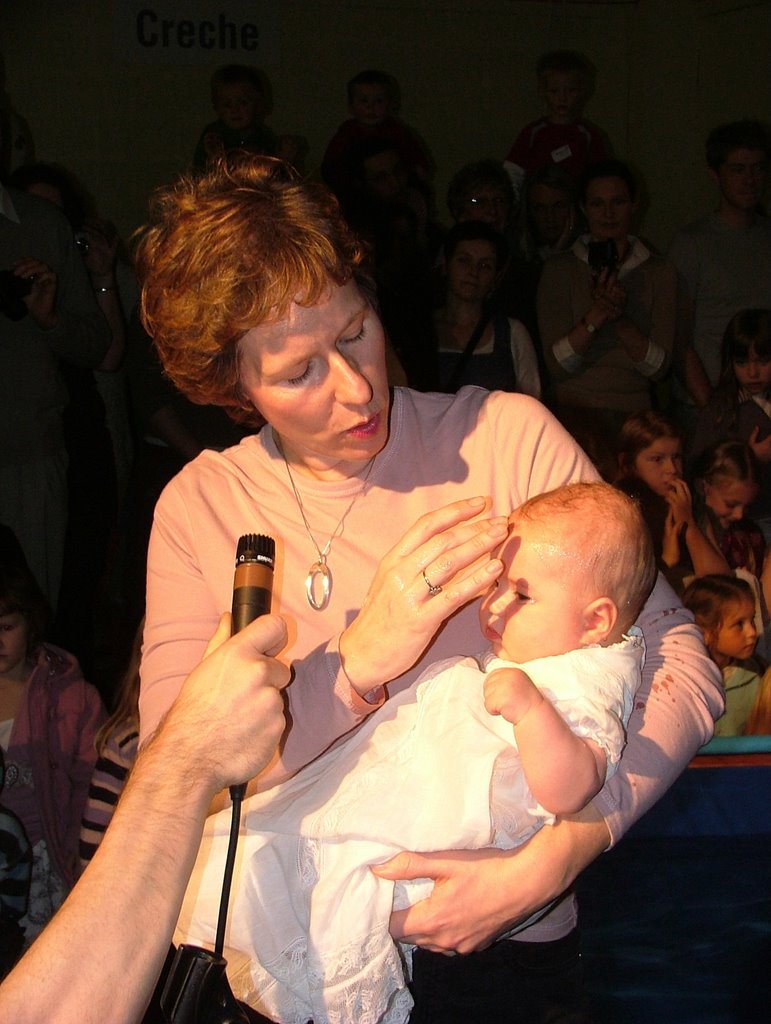
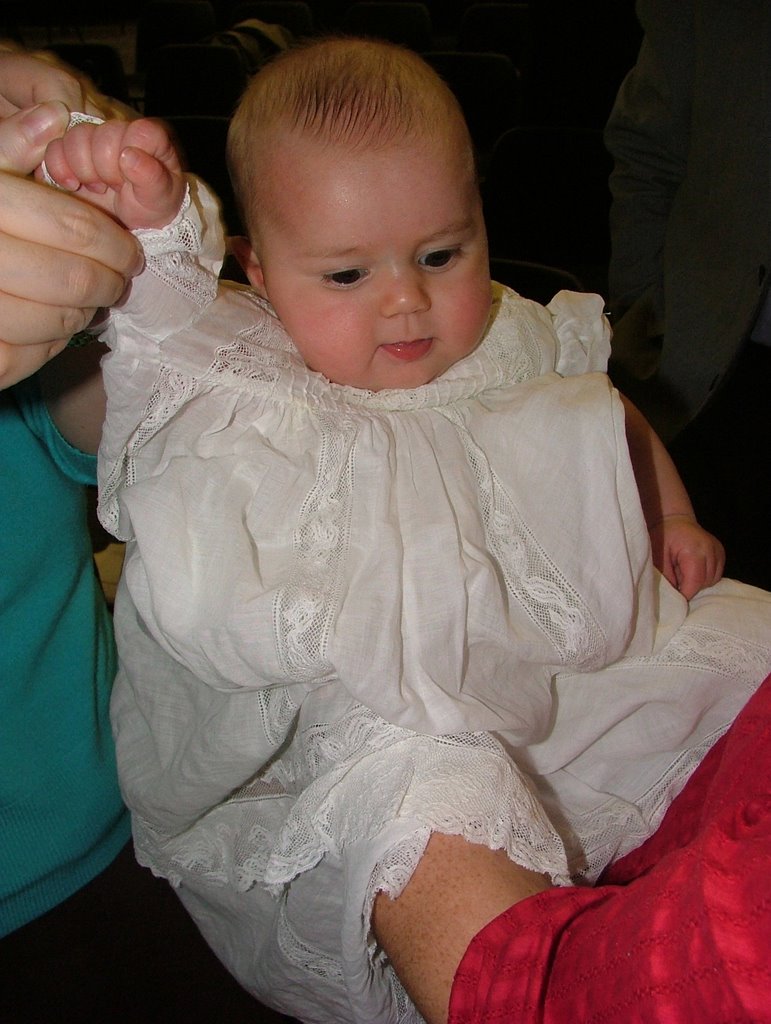
Here are a couple of photos from Elijah’s baptism.

He is wearing a christening gown that has been handed-down through five generations of my family, and which Susannah and Noah both wore before him. And, like his sister and brother, he was baptised by our friend Anne. But whereas they were baptised at the font in the parish church, he was baptised in a portable baptistery in a converted factory shed. Tradition, continuity, and change…


Almighty God
give us grace to cast away the works of darkness
and to put on the armour of light,
now in the time of this mortal life,
in which your Son Jesus Christ came to us in great humility;
that on the last day,
when he shall come again in his glorious majesty
to judge the living and the dead,
we may rise to the life immortal;
through him who is alive and reigns with you,
in the unity of the Holy Spirit,
one God, now and forever.


(Collect for the First Sunday in Advent)


, ,

Advent 1 : First Sunday

Often, as I’m pulling on my coat and heading towards the door, my son (not quite 4) will call out, “Wait for me!” “Wait for me!” – and hold me up…

Frequently, when I’m taking him to nursery, he’ll run down the ginnel and out along the street; and, if the key sticks in the lock, I’ll emerge onto the pavement calling out, “Wait for me!” “Wait for me!” – to see him almost at the end of the road already…


If I listen, will I hear God’s voice, calling “Wait for me!” “Wait for me!” – holding me up, here…calling me back, there…?

And will I feel frustration at his calling out; or will I choose to take delight in being close, in holding his hand, in the conspirator whispers of a small boy with his dad…?


Saturday, December 02, 2006

Christmas Christening


Tomorrow morning we are bringing Elijah to be baptised. He is part of our family, and we are part of God’s family. It will be a day of celebration and thanksgiving. The first party of the Christmas season!


,

Advent 0

About that time Caesar Augustus ordered a census to be taken throughout the Empire. This was the first census when Quirinius was governor of Syria. Everyone had to travel to his own ancestral hometown to be accounted for. So Joseph went from the Galilean town of Nazareth up to Bethlehem in Judah, David's town, for the census. As a descendant of David, he had to go there. He went with Mary, his fiancée, who was pregnant.
(Luke 2:1-5, The Message)

It all begins with an emperor who wants to know about his subjects // and a king who wants to know, and be known by, his people.

With one ruler who delegates the task from afar, never leaving the luxury of his palace // and another who comes in person, leaving everything behind.

With the man who laid claim to being the son of the gods // and the god who laid claim to being the son of man.


Friday, December 01, 2006

Advent -1

Technically, it isn’t Advent yet. Technically, Advent begins at Evening Prayer on the Eve of the First Sunday of Advent and ends before Evening Prayer on Christmas Eve. Because Christmas Day is a fixed date – 25th December – and therefore falls on a different day of the week from year to year, the First of the Four Sundays of Advent wanders between 27th November (as it was last year) and 3rd December (as it is this year). So technically, Advent this year begins tomorrow evening…

…But the vagaries of the Liturgical Calendar don’t fit with manageable packaging! So Advent Calendars standardise the season, from the 1st to the 24th of December.


I intend to blog an Advent Calendar, beginning today at -1. Because creating packaging is helpful in seeking to communicate what we believe about God; but in standardising the package for the sake of our convenience,
in smoothing out the element of disruption,
in regularising the irregularity,
we run the risk of missing something important at the very heart of what we are trying to communicate in the first place…


Wednesday, November 29, 2006

Delicacies


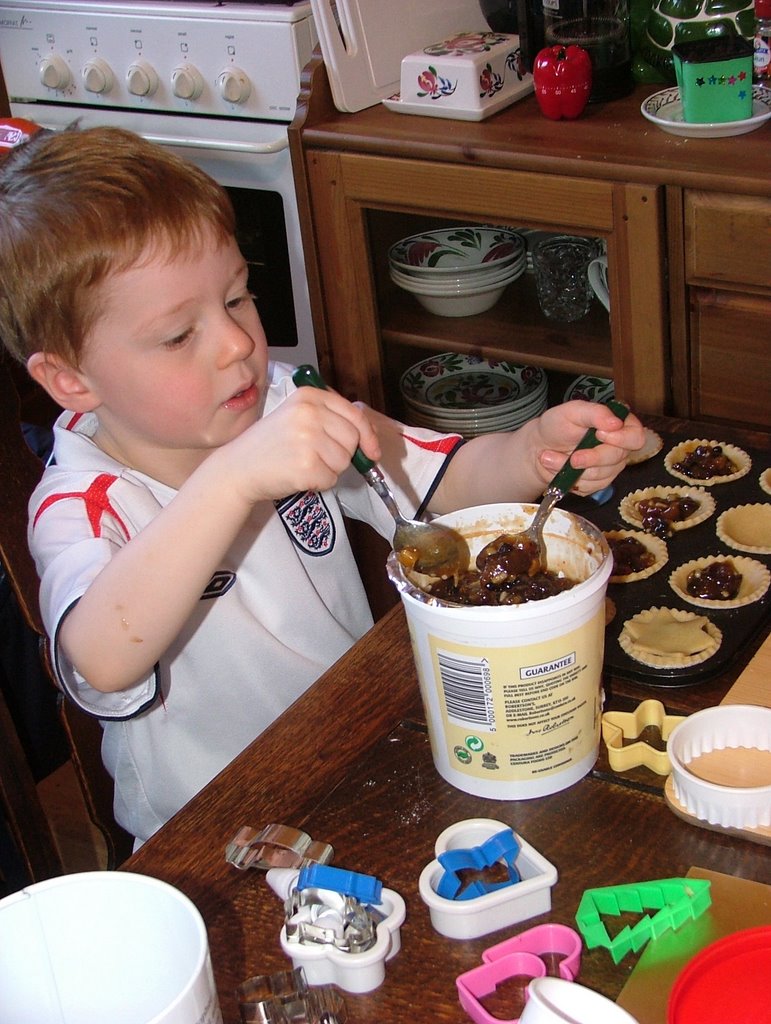
…And lest he should feel left out, here’s Noah helping Jo make mince pies a little earlier on today.


,

Lessons


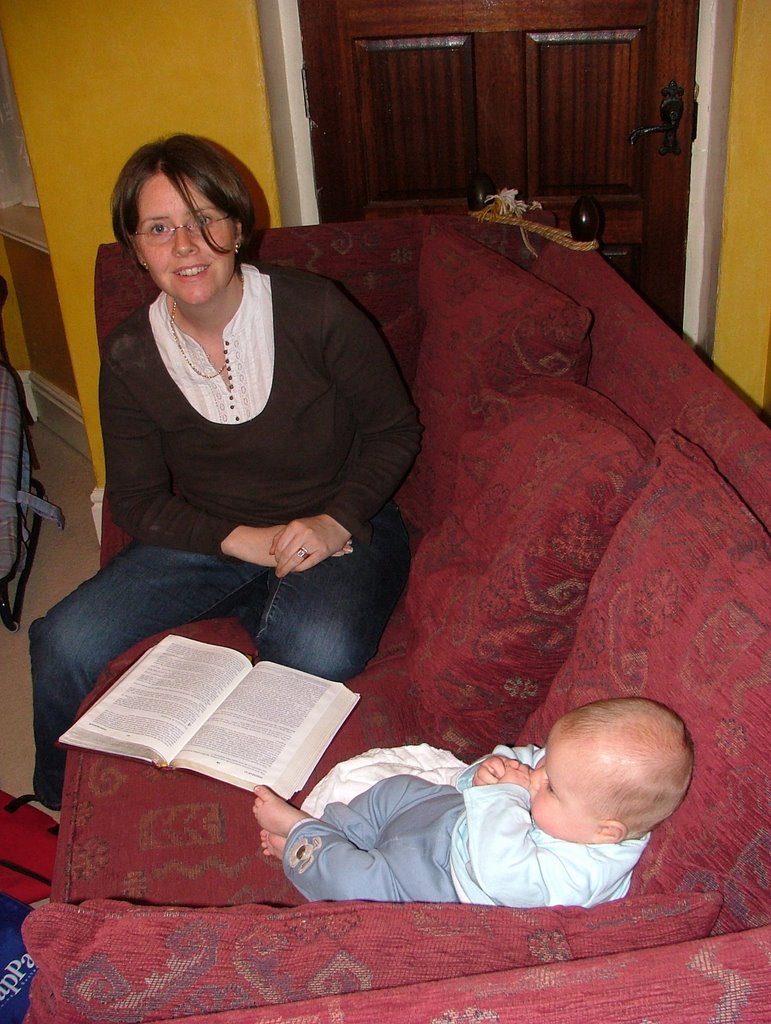
Jo and Elijah pondering the scriptures together…

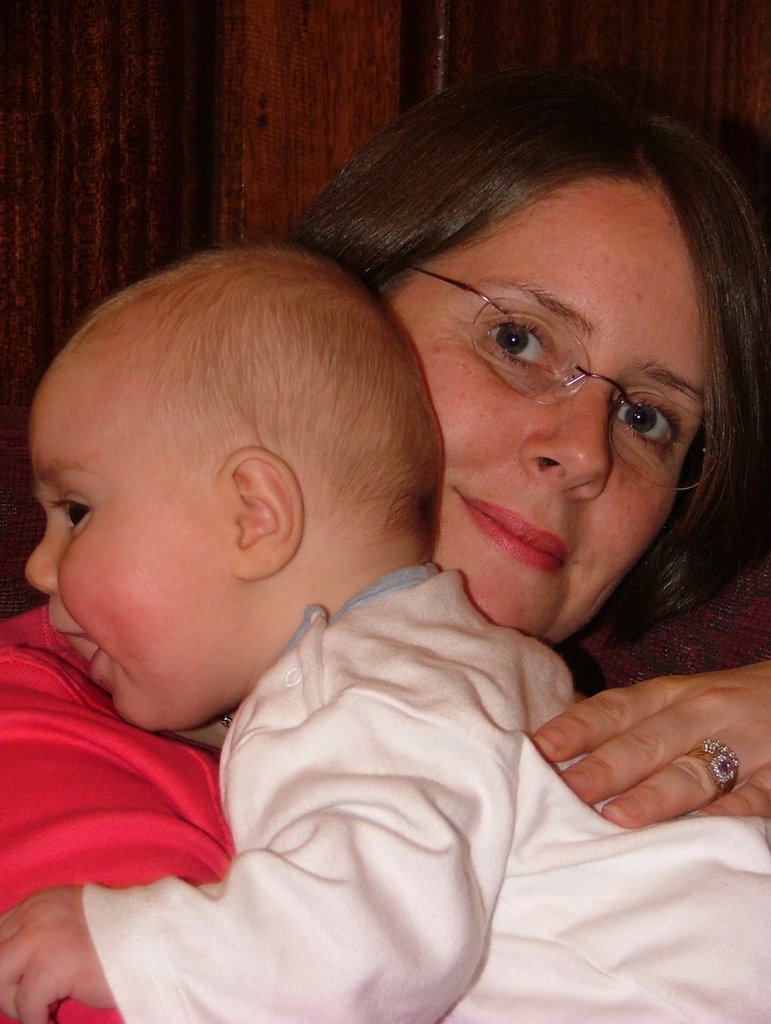
He’s grown a lot in three months…thought it was about time for an updated photo.


,

Friday, November 24, 2006

Waiting

Last night we met with some friends, and I posed the (pre-Advent) questions, “What is it that you are waiting on God for?”…“And, how do you wait?”

I find having to wait deeply frustrating. In my brokenness, I would rather be a human doing than a human being. I hate being put on hold on the phone; hate standing in a long queue at the bank or in a shop; hate sitting in a car that isn’t moving, surrounded, for as far as the eye can see, by other cars that are going nowhere, on the motorway…

So my question “How do you wait?” wasn’t a rhetorical one. Here’s some of the collective wisdom that came out of our discussion:

God would appear to value waiting:
(Abraham had to wait for a son; Joseph had to wait in prison, before eventually becoming first minister of Egypt and saving the peoples of that empire from famine; Moses had to wait in the desert before finally leading his people out of captivity from Egypt; then the Israelites had to wait a generation before entering the promised land; David had to wait thirteen years in caves in the wilderness, between being anointed king and being crowned king; his descendents had to wait seventy years in exile in Babylon; everyone had to wait 600 years between Isaiah prophesying concerning the coming of Jesus, and it actually taking place; Jesus had to wait to begin his ministry – “My time has not yet come”…“The time has come!”; Paul had to wait fourteen years in the wilderness before being accepted by the community of Christians; the martyrs beneath God’s throne in heaven wait…Yes; God would appear to value waiting…)

Sometimes we have to wait for as long as it takes for God to work a change in us, before we are ready for the thing we wait for to happen…
(Though sometimes there are also external factors that God is also working on.)

Those of us who tend towards activism (most of the people in the room, as it happens; though one finds the waiting as satisfying as the point where waiting ends) would love to know what that thing in us that needs to change is – so that we can try to do something about it!

…for that very reason, God doesn’t always let us know what it is that needs to change in us – what he is up to ‘behind the scenes’ – until after the event (if at all).


,

God's Economy

Over the years, there have been times when we’ve needed a sum of money we simply didn’t have. We don’t put money aside ‘for a rainy day’: Jesus taught us to ask God to provide our daily bread, so why set bread aside to go stale, or alive with worms?! Whenever we’ve had a specific financial need, I’ve asked God to meet it, and we’ve not mentioned it to anyone else. Most often, God seems to meet that need by prompting someone to put the exact amount in cash in an envelope through our letterbox, anonymously.

At the moment, God appears to be playing a different game. I say game, because God’s economy is about generosity and creativity and childlike delight, and holding lightly what you have been given, and keeping an eye out for who we might bless. At the moment, we don’t have any unmet financial needs. But a few people have given us cheques recently, saying that they felt God had prompted them to do so. First, we were given a cheque for £100; and immediately became aware of an opportunity to meet someone else’s need. So, we decided to send them a £50 shopping voucher, intending to look out for someone else to give the balance. But before we had a chance to get the voucher, we were given another cheque, this time for £150. And again, almost immediately we became aware of a situation, where £100 would meet someone else’s need…

So, we’re giving money away, but we just can’t get rid of it fast enough! God is playing a game, a game of join-the-dots: person ‘A’ has money that could meet person ‘C’s need, and a willingness to give, but person ‘A’ doesn’t know person ‘C’…person ‘B’ is known to person ‘A’ and knows of person ‘C’s need…

God’s economy of giving and receiving and giving has a game-like quality to it. It is fun. Go play.


,

Where Two Or Three Are Gathered

My friend Paul Maconochie, the leader of St Thomas’ Philadelphia Campus in Sheffield, is in hospital at present. There is too much fluid in one side of his brain, and not enough on the other. The onset of the condition came just after he had shared with the church where he felt God was leading us over the time Paul will be senior leader…

In response, the church has agreed that, whenever we come across each other, the first thing we will do is thank God for giving us Paul as our leader, and pray that he would be fully restored to health. The giving thanks is important: we’ve learnt that choosing to give thanks in hard circumstances does something within us that makes us more open to God, and allows him to break into our experience, and to flow through us in ways that transform our experience, more fully. And of course, the thankful attitude is a gift from God in the first place; but, God seems willing to call things he has given us ‘ours,’ and receive them as gifts ‘from us’ (e.g. John 21:1-14, “Bring some of the fish you have just caught.” – as Conrad Gempf observes in Mealtime Habits of the Messiah)

So far this week, I’ve prayed for Paul with people I’ve met in the pub, the playground, and a department store, as well as in our home…one of the people I prayed with in the department store told me he can’t go to the supermarket without bumping into people to pray with…other people I’ve prayed with have prayed with other people on the street, and at school…

It has been great. It’s not been a big deal in an intrusive sense, but it has revitalised how members of the church feel about praying in public places – as one person put it, being held accountable in that by multiple others. It rightly disrespects the sacred/secular dichotomy; and, I suspect that once we see this prayer answered we won’t stop, but will take up other foci one after another.


, ,

Thursday, November 23, 2006

Buy Nothing Day | Preparing For Winter

Maggi Dawn writes great posts, and I really like this one. I must admit I’d not come across Buy Nothing Day before. The idea sounds a bit like standing frozen still in the middle of Far Gate or Meadowhall and letting the crowds of Christmas shoppers stream past, like they do in time-lapse film footage; before exhaling and stepping forward into momentum again…And that pause is a helpful one. But, if it is just an opting-out, that feels slightly negative to me.

Which is why I really like the way Maggi describes using the time freed-up from shopping, to prepare practically for winter, and thoughtfully for Christmas. Go read. I also found it helped me see the hitherto depressing thought of sorting out the chaos that is Susannah and Noah’s attic bedroom (or, to be fair, the more grown-up rooms of our house!) in a positive light…though how I face it remains to be seen! And finally, it chimes well with the idea of Advent – okay, I’m getting a little ahead of myself, but, you know I love Advent – being a time of active waiting and preparation. Perhaps the weekend before Advent begins is the time to set the house in order after all.


, ,

Tuesday, November 21, 2006

Milestones


Yesterday, our little girl lost her first tooth…

(hey, not everyone who visits wants to read about church!)


A Sheep In Lion Country, Part 3

Part 3: Understand how to behave as a shepherd.

First, some general principles:

Never dismiss or trivialise the experience of the presence of ‘lions,’ ‘wolves,’ or ‘bears’ – the attacks of satan, including through sickness or demonic oppression – in people’s lives.

Never, ever, suggest that those who know Jesus the Shepherd will not experience such attack, or that if they do it is because of unconfessed sin on their part. Immunity from spiritual attack is not biblical; what is modeled biblically is God as our stronger covenant partner, who will pursue the enemies who have carried us off, inflict defeat on them, and carry us home. Unconfessed sin may give the enemy something to manipulate in achieving their aims, but, the thief comes to steal and kill and destroy simply because the thief comes to steal and kill and destroy.

Always encourage people in such circumstances to focus – and re-focus – on Jesus the Shepherd, rather than on their circumstances. This is not denial, but a conscious decision to look to our Deliverer. How one does so will vary, in part, depending on our tradition of spirituality. But recognise that a sheep in the jaws of a lion might not be able, at that moment, to look to the Shepherd; and at times we all need those around us to stand with us and do what we cannot.


What I want to focus on here is a practical model for supporting those in more extreme pastoral situations; those we might describe as sheep who have had their leg broken, either through attack (such as sickness) or folly (such as a deliberate decision to do something that separates them from God and those around them). The model is based on the shepherd’s practice of (breaking a leg where necessary and) resetting the broken leg with a splint and bandages. The model uses structures to form a solid ‘splint’ and people as the ‘bandages’ that firmly hold the person in need of support. We have used this model in situations as diverse as:
Long-term sickness, where a family has needed support (spiritual, emotional, practical) over a period of time, necessitating that the support did not become overly burdensome for one or two individuals;
Alongside marriage counseling for the couple concerned, helping a young married man who had been visiting prostitutes. In this situation, it was not appropriate that the issue remained a secret; it was not appropriate that the whole community knew (not least, out of respect for his wife); and it was not appropriate that only church staff knew (because pastoral responsibility does not only fall on those paid to do it, and also to avoid exposing church leaders to the temptation to use knowledge of an individual’s falling short in order to exercise control over them).

Obviously, we’ve tailored the model to suit, but, here’s a composite version:
The ‘bandages’: we asked an individual or couple to take a day in the week when they would take responsibility to pray for the person in question, for a set period of time, to be reviewed at its end. They would also contact the person during the day, by phone, including praying with them. In some cases, they might do something practical to help out, too.
The ‘splint’: sometimes the structure was to ask the person in question to be at a certain place at a certain time in the day for the duration of the re-setting; for example, attending communal prayers. If that sounds a bit like reporting to the police station while out on parole, at least in addressing sin issues, it is! But, it also requires of the person that they actively engage with the process, which is essential if it is to be effective. Sometimes the structure was to identify trigger-situations, and to be accountable to acting accordingly (e.g. I will not go to that place at that time).

Obviously, this is only one model, and only appropriate in certain situations. But we’ve found it helpful, and worth sharing with others.


Now the tax collectors and “sinners” were all gathering around to hear him. But the Pharisees and the teachers of the law muttered, “This man welcomes sinners and eats with them.”
Then Jesus told them this parable: “Suppose one of you has a hundred sheep and loses one of them. Does he not leave the ninety-nine in the open country and go after the lost sheep until he finds it? And when he finds it, he joyfully puts it on his shoulders and goes home. Then he calls his friends and neighbours together and says, ‘Rejoice with me; I have found my lost sheep.’ I tell you that in the same way there will be more rejoicing in heaven over one sinner who repents than over ninety-nine righteous persons who do not need to repent.

(Luke 15:1-7)


, , , ,

Saturday, November 18, 2006

A Sheep In Lion Country, Part 2

Part 2: Understand how the Shepherd behaves.

In the light of the past 24 hours, I want to pick out two parts of the journey described in Psalm 23:
the absence of fear and presence of comfort in the valley of the shadow of death, brought about by the shepherd’s rod and staff;
and the table prepared for us in the presence of our enemies.

The story of this psalm is of a flock of sheep, being called out from the low winter pastures (where several flocks of sheep are ‘pooled’, and wild animals tend not to venture, unless unusually hungry, for fear of many shepherds); and led up the mountainside side, up a valley where the sheep can smell predators in the bush, but can’t see them (a place of fear-of-death, and death itself; a place of confusion); to the high summer pastures, on the table-top plateau.

The shepherd carries two sticks. One is a club, to beat, and kill, lions and wolves and bears. And knowing that the shepherd swings the club enables the sheep to follow. The other stick is the crook, to press against the side of the wayward sheep and steer them back onto the safe path; or to lift up a sheep that has fallen over the edge. And knowing that the shepherd leans on the crook enables the sheep to follow. Fear recedes; comfort fills the space left in its wake.

When a sheep was caught-up in the jaws of a predator, the shepherd would fight the attacker off; dress the wounds, bind any broken bones, and carry the sheep on his shoulders until the broken leg was mended. And sometimes, when a sheep consistently wandered away into danger, the shepherd would actually break one of its legs himself; bind it, and carry the sheep on his shoulders, whispering to it, until the leg was mended. And a sheep that had been carried, for either reason, would not wander far from the shepherd again.

The shepherd does not only steer the sheep; he provides them with grace. The prepared table is the pasture of the plateau, an expanse of fresh grass and wild flowers, beneath the open sky. The sheep that has come through the valley of the shadow of death and out the other side needs space to be restored.

The predators are still there; on the edges, prowling the perimeter. But this is no longer an arduous climb up a steep and narrow margin of safety. It is time and space secured in order that the sheep might regain strength – before the next time they will face the valley.


To follow: Part 3: Understand how to behave as a shepherd.
(some practical applications.)


The LORD is my shepherd, I shall not be in want.
He makes me lie down in green pastures,
he leads me beside quiet waters,
he restores my soul.
He guides me in paths of righteousness
for his name's sake.
Even though I walk
through the valley of the shadow of death,
I will fear no evil,
for you are with me;
your rod and your staff,
they comfort me.
You prepare a table before me
in the presence of my enemies.
You anoint my head with oil;
my cup overflows.
Surely goodness and love will follow me
all the days of my life,
and I will dwell in the house of the LORD
forever.

(Psalms 23, New International Version)


, , , ,

A Sheep In Lion Country, Part 1

Part 1: Understand how lions behave.

Stay alert! Watch out for your great enemy, the devil. He prowls around like a roaring lion, looking for someone to devour.

The past 24 hours have been hard. A friend of mine, the leader of the church I belong to, is in hospital with a build-up of fluid in his brain. The severe headaches prevented him from being involved in Visitors’ Week. The condition has apparently come out of nowhere, and, for now, is baffling the doctors. Another friend, who has wrestled with depression for a long time, tried to commit suicide yesterday. Thankfully, they failed. Last night made for a story I may tell one day in the distant future, but not for now. But, the events of the past 24 hours have brought into sharper focus some thoughts I’ve been reflecting on over several days, about how the enemy targets Christians…

Lions hunt in particular ways, and seek out particular targets. Watch lions go for wildebeests, or even elephants when desperate enough, and you’ll notice a pattern. First, they get as close to the herd as they can without being detected, using the cover of long grass, or darkness, and with the wind carrying their scent away from the prey. Then, at close quarters, they break cover. At this point, their tactic is surprise, resulting in a reaction of fear; and, in the ensuing panic, they target any animal that gets isolated from the others – often because it is young or already injured.

As a Christian, isolation from other Christians – existing beyond, or even on the fringes of, a community of faith – is dangerous. And it is pertinent to observe that, as with herd animals, confusion tends to cause us to run from the group rather than to it.

But lions don’t only target the obviously weak and vulnerable. Sometimes lions will target the leader of the herd. The lions in Israel – now long since killed off – would have not only targeted sheep, but shepherds: kill the shepherd, and you get to kill the sheep easier. Before he was king, before he was general, before he slew Goliath, David killed the lion and the bear.

Church leaders are targets. Not because they are More Important than other Christians, but because they are a more strategic prey. Take out a church leader, and you can pick off their flock. People get sick; but, the timing of my friend’s brain condition suggests something more sinister than coincidence to me.

And though it is a very different circumstance, all I’d want to contribute to the current blogosphere debate over the latest high-profile American church leader to fall from grace is that perhaps they is more to hypocrisy at play: the battlefield you fight on is a likely battlefield to fall on. No soldier serving in Iraq is likely to be blown up in Afghanistan. When you make a particular stand, it shouldn’t surprise us that the world, the flesh and the devil might concentrate their efforts against us there. Like me, my friend has taken a stand against sickness…

So, if you’re reading this and you know anyone who is on the edge of community and moving outwards, pray for them. And if you’re part of a church community, pray for your leaders, too.


And now, a word to you who are elders in the churches. I, too, am an elder and a witness to the sufferings of Christ. And I, too, will share in his glory when he is revealed to the whole world. As a fellow elder, I appeal to you: Care for the flock that God has entrusted to you. Watch over it willingly, not grudgingly—not for what you will get out of it, but because you are eager to serve God. Don’t lord it over the people assigned to your care, but lead them by your own good example. And when the Great Shepherd appears, you will receive a crown of never-ending glory and honour.
In the same way, you younger men must accept the authority of the elders. And all of you, serve each other in humility, for “God opposes the proud but favors the humble.” So humble yourselves under the mighty power of God, and at the right time he will lift you up in honour. Give all your worries and cares to God, for he cares about you.
Stay alert! Watch out for your great enemy, the devil. He prowls around like a roaring lion, looking for someone to devour. Stand firm against him, and be strong in your faith. Remember that your Christian brothers and sisters all over the world are going through the same kind of suffering you are.
In his kindness God called you to share in his eternal glory by means of Christ Jesus. So after you have suffered a little while, he will restore, support, and strengthen you, and he will place you on a firm foundation. All power to him forever! Amen.

(1 Peter 5:1-11, New Living Translation)


, , , ,

Wednesday, November 15, 2006

Adding Up

Maths is not my strong point.

But here is a sum I’ve been thinking about today: 69 – 3 = ?

69 is the percentage of people in Sheffield and the surrounding area that chose to identify themselves as ‘Christian’ in the most recent population census. That may be a pretty low bar definition of ‘Christian’, but they did have other options, including ‘No religion’ (about 14%).

3 is the percentage of people in Sheffield and the surrounding area that attend church. And as above, we’re dealing with a low bar: not ‘people who attend a worship service every Sunday and a midweek group each week’, or any other particular measure of commitment (usually identified in terms of time, money, or effort); but people who would identify themselves as part of a local church. So, the 69 and the 3 are comparable numbers.

69 – 3 = 66

66 is the percentage of people in Sheffield and the surrounding area that chose to identify themselves as ‘Christian’ but do not attend church. Who consider the church to be either irrelevant, or inaccessible, to them. Either because they have experienced the church as irrelevant and left, or inaccessible and not come back; or because no-one has demonstrated the relevance of being in covenant relationship with God to them, in a way that they can understand.


My point is not to beat myself, or anyone else, on the back for failing. That would achieve nothing, other than great delight to satan. Rather, this sum, which does not add up, causes me to repent – and believe, for the Kingdom of God is near at hand…

Repentance is concerned with a change of mind; belief with the active out-working of the new mindset:
Repentance begins when we Observe something that breaks into our lives in a disruptive way [66%]; causing us to Reflect on what we have observed [relevance and accessibility]; and Discuss our observation and reflection with others in community [how can I be more relevant and accessible? What mindsets do I need to be set free from? What mindsets do I need to take up?].
Belief moves us on with renewed hope as together we form a Plan out of our discussion [simple, practical, concrete steps or actions]; and allow the community to hold us to Account in regards to the plan [am I being an usher of Good News, or not?]; before we Act [be, do].


, , , , ,

Tuesday, November 14, 2006

The Organism And The Organisation

Notes taken at a seminar led by Revd Mick Woodhead today:

The church is an Organism. It grows. Nothing stops growth as effectively as leaders exercising too much control – pulling up plants before it is clear what they are. Organic growth requires “low control, high accountability” – leaders who don’t make all the decisions, and followers who are open with their leaders about the decisions they have the freedom to make.

The church requires Organisation – it is the bed that frames the flowers, the watering and fertiliser as needed. Church organisation exists to serve the organism. It needs to be “light-weight, low-maintenance” so that it can respond to the organism’s lead – the organisation spreading out in seasons of organic growth so as to provide support, shrinking back in seasons of organic dying-back. If any part of the organisation doesn’t serve the organism, get rid of it; otherwise, growth is constrained, decline sets in.

Three key things to foster, for yourself and those you lead:
Lifestyle (of discipleship – at St Thomas’, ‘Lifeshapes’ tools for processing our lives as disciples);
Structure (community for mission/growth – at St Thomas’, ‘cells’ gathered in ‘clusters’ gathered in ‘celebrations’);
Accountability (support/investment for leaders – at St Thomas’, ‘huddle’).


, , ,

Beware The Gap


The Church (at least in the West) has focused on teaching, which imparts knowledge
…it has not focused on training, which imparts practical skills for living as disciples.


, , ,

Visitors' Week

It is Visitors’ Week at St Thomas’, the church in Sheffield that we are part of, and used to be on the staff team of. Visitors are a great logistical problem to have. So many church leaders from around the world were writing to us asking to come and learn the things that we’ve been learning here – in particular about discipleship and community – that if we let them all come we’d spend all our time talking about our walk, and have no time to walk it. And that is the beginning of the end. So, the senior leaders decided to set aside two weeks in each year where the staff would clear their diaries of other commitments, and some of the members of the church would take time off work, and we’d ask anyone who wanted to come and see to come and see at these times. I guess it is akin to getting everyone to sit down in groups of fifty, so that Jesus can feed five thousand. Hardly glamourous!

I've had the privilege to join in at another Visitors' Week again this week. Over the past two days, I’ve spoken to people from England and Scotland, Norway, Sweden, Finland, Denmark, Germany, Switzerland, Slovakia, Australia, New Zealand, and the USA; church leaders in the Anglican, Lutheran, Baptist, Vineyard, Nazarene, and in independent traditions; from parishes and regional youth networks, and seminaries.

I love sharing the things I am passionate about. But I also love hearing about the contexts our visitors come from. I know I’m privileged to have such a broad exposure.

I don’t think We Are It. (I’ve certainly experienced enough we get wrong along the way.) But I do believe that God has taught us principles that are not only effective in our context but transferable to any other of the many and varied contexts our visitors come from. Some of the things we get to do aren’t transferable – they are possible out-workings of our principles in our context; and even here they change from season to season. Likewise, some of our visitors get to work out the same principles in ways we don’t have the opportunity to do. But it is both exciting and humbling to see the things we have learned here spread out; to break off a piece of bread or fish, and pass it on…


, , ,

Partridge In A Pear Tree


The gardens at the back of our row of houses used to be a fruit orchard. Very few trees remain now, but we have a couple – a pear tree and an apple tree – on the boundary between us and our neighbours. Now the summer is over, and most of the leaves have fallen, a few pears cling on among the bear branches. You wouldn’t want to eat them. We’ve let all the fruit, on both trees, fall for the birds and animals.

What the trees need is a thorough pruning, by a qualified tree surgeon. If we owned the property, we’d get it done. Done this year, the trees would recover. Leave it much longer and, like the trees that have already been cut down, they will be no good for anything but firewood. Their energy is spent on feeding branches, and fighting disease; the fruit is stunted and bitter.

Jesus said that our lives needed pruning back, at the end of each season of growth and bearing fruit (John 15:1-17). For a tree to continue to bear good fruit over any length of time, the gardener must not only lop off any diseased branches, but also cut back healthy branches: if not, the tree will grow straggly and wild. Left unpruned, it may continue to bear fruit for years; but the fruit will become increasingly bitter to the taste…

It is one thing to allow Jesus to prune us of things like anger, jealousy, or pride. Allowing him to prune us of good branches – contexts which have been fruitful, such as opportunities to serve and bless others – can be another matter. Especially as we are judged by others, and so often judge ourselves, mostly on what we do, on activity, on ‘measureable results.’ These are the criteria by which the effectiveness of churches and missional leaders are usually weighed.

Ask me right now, “Where is the visible fruit in your life?” and I’d have to say, there is not much to see. I’ve been pruned back, hard. And all I can do is abide, allow Jesus to enfold me and hide me in his love. Out of that, he has promised, will come new growth, and fruit that is good. No-one enjoys pruning at the time. But, it has got to be better than the alternative…


, , , ,

Monday, November 13, 2006

Preparing For Advent


Christmas is a big deal in our house. The season from the first Sunday in Advent to Epiphany is my favourite time of the church year. For me, Christmas is incredibly special: no Christmas, no everything that follows after…

Christmas is Good News. And, I think that there are more cultural connections with other people to communicate that Christmas is Good News than there are to communicate that Easter is Good News, at least where we live.

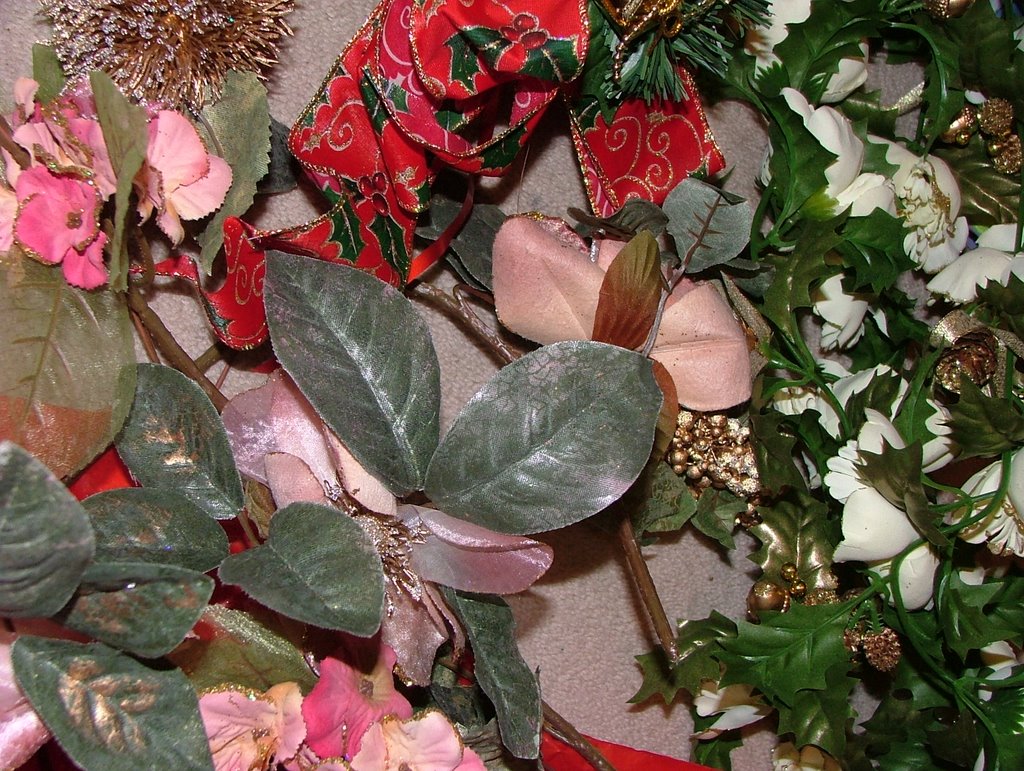
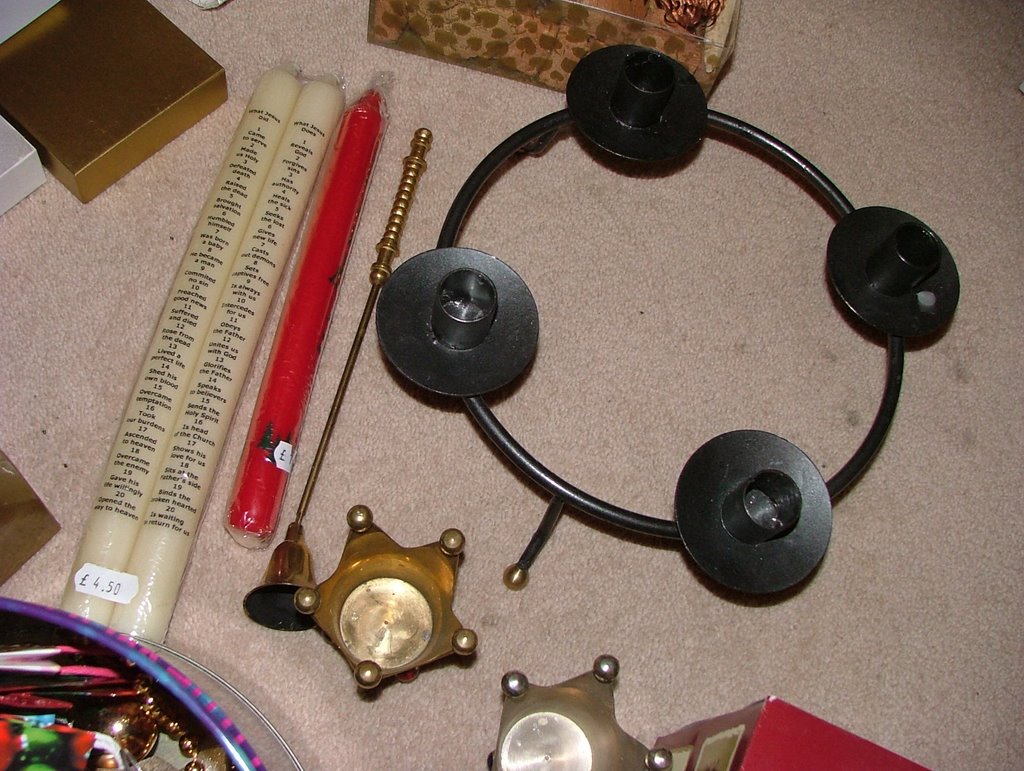
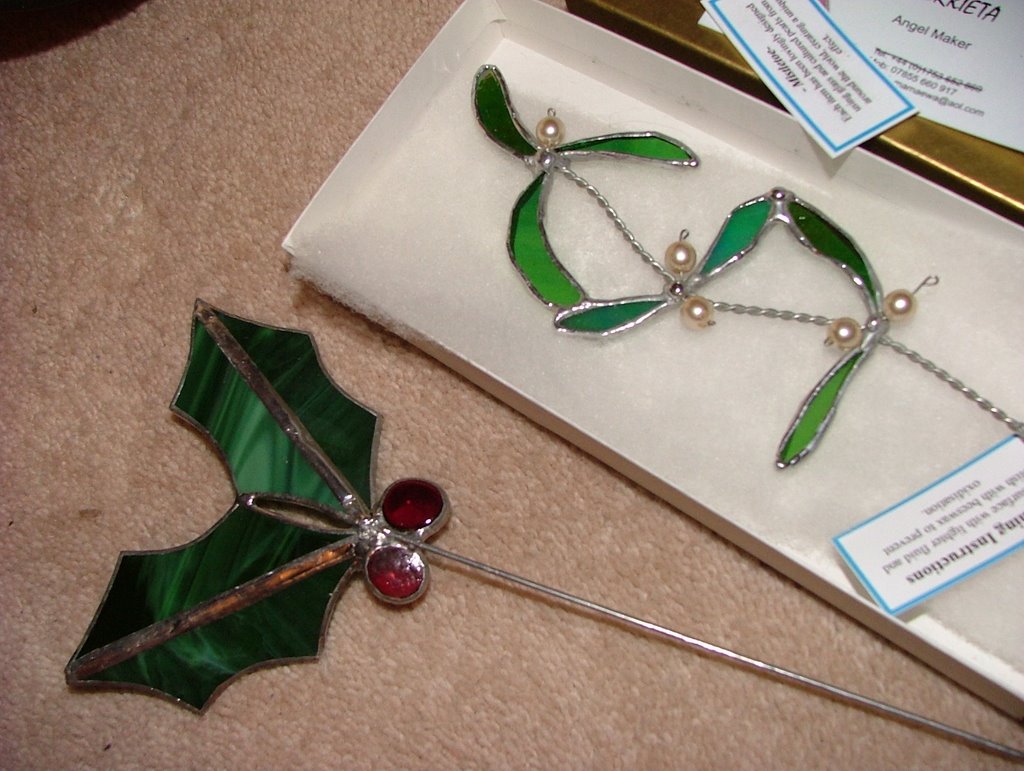
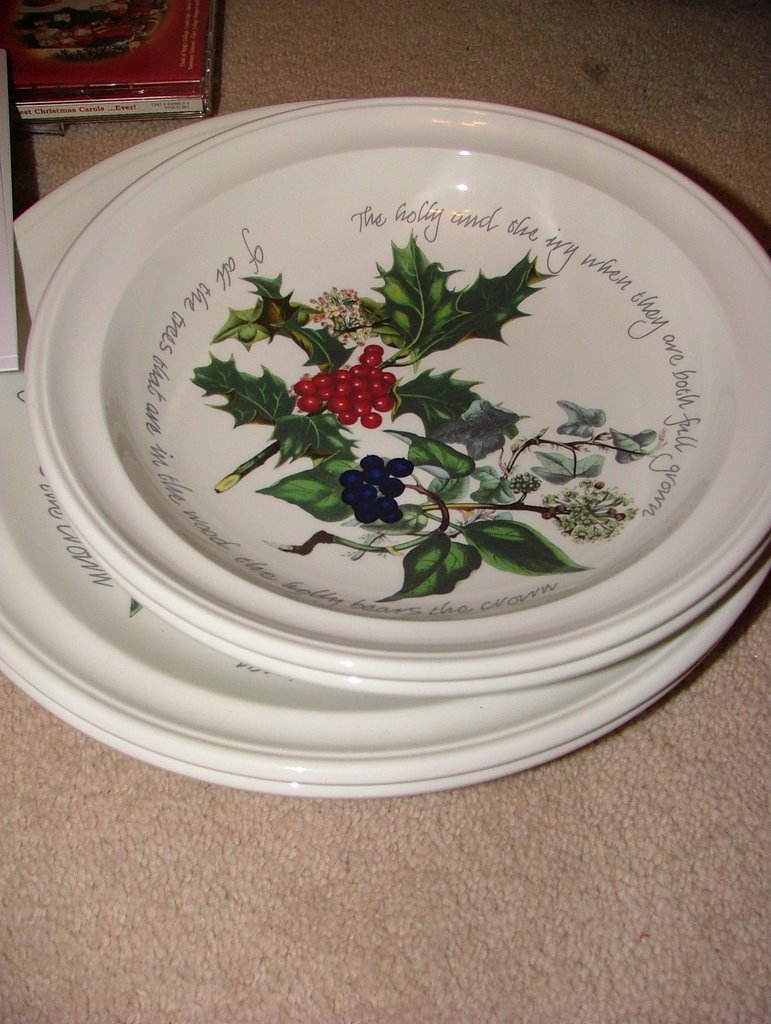
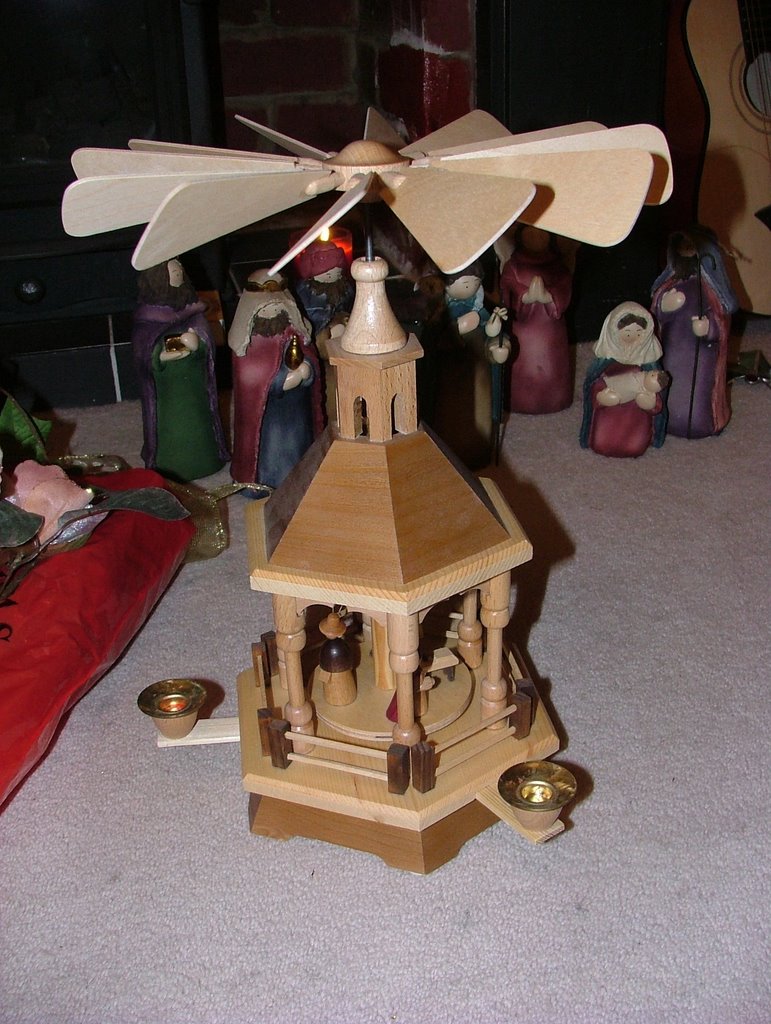
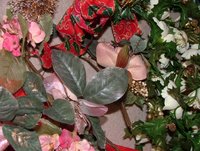
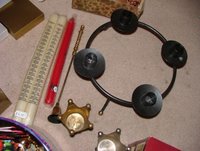
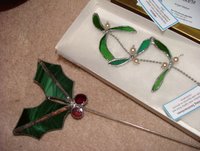
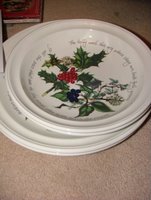
Christmas is a big deal in our house. Each Sunday through Advent, Jo brings out a few more decorations, so that we build towards Christmas itself. Tonight, she got out The Christmas Box, and emptied its contents on the living-room floor, because she and a friend of ours are planning a Celebrating Christmas event to which we will invite friends from the school playground, and at which they will present ideas for building family traditions to mark the festive season. Here are some suggestions…

Involve all of the senses:
Sight – Advent wreaths/candles, tree decorations, lights…with their symbolic reference to Life, and the Light of the World…
Sound – play Christmas CDs, whether traditional carols or classical or Bing Crosby and Nat King Cole…find, and read out-loud, Christmas poems, both classic and new…bring out books re-telling the Christmas Story for children, and read them at bedtime (and then put them away for a year so they stay special – the books, not your children!)…
Smell – is perhaps the most evocative sense for our memory…candles or burning oil or pot pouri scented with frankincense and myrrh…
Taste – mince pies, lebkuchen (gingerbread cookies), mulled wine…foods that make Christmas special…
Touch – nativity set – perhaps add pieces over several days; Advent calendars; the Christmas Story books (again)…

Beg, Borrow or Steal Traditions:
You might love the traditions you grew up with. Or you might not. You might not have grown up with any. Some we’ve stolen include…
A feast at Epiphany, where small presents symbolizing gold, frankincense and myrrh – as simple as gold nail varnish for the ladies – are laid on every guest’s place setting…
Giving our god-children a Christmas tree decoration each year – often as a gift-tag on their main present from us – so that they build up a collection until they have something with which to start their own traditions when they eventually leave home…

“Santa” may be an anagram of “Satan,” but, Saint Nicholas was a Christian Bishop:
I unashamedly love Father Christmas, because his story is the central Christian story of redemption – he threw three bags of gold through the window so that the daughters of a poor man did not need to sell themselves into slavery. Indeed, it is the story of one who has experienced redemption bringing redemption into the lives of others…
…In the spirit of Father Christmas, or Santa Klaus, why not ‘give’ goats, wells, toilets, or school materials? Check out Oxfam Unwrapped or Present Aid for ideas…


Of course, Christmas can be a hard time for people, too. I wouldn’t want to pretend it wasn’t. For example, more divorces are set in motion in January, following Christmas, than at any other time of the year. Or, on a personal note, last Christmas my sister, who had just come out of hospital following surgery to remove a brain tumour, was taken back into hospital by ambulance from the Christmas Dinner table…

The Christmas gift of myrrh points to pain at the heart of Christmas. Several years ago now, a friend of ours lost her father in a car crash in Advent. At the time I wrote her a poem, sealed it in an envelope, and gave it to her saying, open it when you feel ready. She has had the poem written out by a calligrapher, and it comes out in the hall each Advent, as part of their own tradition. Which is to say that I do think that the pain in Christmas can be folded-into the mix in a way that remains Good News, without cheapening that Good News in any way.


, , , ,

Thursday, November 09, 2006

This Is Not A Church...This Is

Hat-tip to Jonny Baker for pointing to "this is not a church...this is" on Steve's small ritual site. Go visit.

Birthday | Spiritual Autobiography

Today is my birthday; a birthday I share with my good friend Ruth Anne Reese over in Lexington, KY. [Happy birthday, Ruth Anne!]

November 9th is also the day in the Church year commemorating the medieval mystic Margery Kempe. Margery Kempe has a claim on writing the first autobiographical work in the English language; a book recording her spiritual journey, including both mystical experiences and physical pilgrimages in England and on the continent to meet with significant leaders in the Church in her day. She was also someone who pushed the boundaries of what was considered acceptable expressions of Christianity, out of a profound commitment to Christ and his Bride, the Church.

If Margery were around today, she would definitely be a God blogger; a member of RevGalBlogPals; and travel to Orkney to hang out with Andrew Jones and his family…


, ,

Monday, November 06, 2006

Remember This?


This coming Saturday is Armistice Day, marking the end of WWI, the Great War To End All Wars; and Sunday is Remembrance Sunday.

Memory is a dangerous thing. We tend not to recall historical events, but re-member – put together, again and again – the impact of those events on our lives. And each time we do so – each time we rehearse the story to ourselves; each time we tell it to another, as much to persuade ourselves as to persuade them – the distance between event and interpretation widens. Perhaps that is in part why Miroslav Volf suggests that there is a time to forget – especially where we have been/feel wronged – as well as a time to remember…

Just because memory is dangerous does not mean that it is bad; but that it needs to be handled with care. Every Sunday (and at other times, too), Christians remember Jesus’ death as they share bread to symbolize his broken body and wine to symbolize his spilt blood. And here, too, I’d suggest we don’t so much think about Jesus’ Passion, as about the impact of that event on our lives. And thinking about that impact is important – indeed, it is the impact on our collective lives as a community that re-members, or, puts back together again, the broken Body of Christ, the Church. But thinking about the impact without reflecting on the event – albeit that we have no direct access to the historical event – puts us, ironically, in danger of erasing Jesus from our lives, as Communion becomes All About Me.


Recently we attended my grandad’s 90th birthday celebrations. After lunch, my dad – grandad’s oldest child – made a toast in his honour. Dad spoke about how proud he had been, as a small boy, of his dad, because he had won the Distinguished Flying Cross in WWII. But granddad would never speak about the War. So one day my dad asked his godfather what they had won the DFC for; and he told him, for surviving. And for a while that left dad disappointed in his father: he wasn’t the War Hero he had thought. But later he realized that he had been wrong: Jack was a hero. Night after night they had flown on bombing raids over Germany; and night after night, close friends did not return (3,249 Avro Lancaster Bombers were lost; and 1,332 Vickers Wellington Bombers)…and yet, night after night, they kept going. Survival may have included a significant element of chance; but those who survived were nonetheless worthy of enormous respect.

Had Jack been shot down, there might be no me. And so I am grateful. But that is not reason enough, to remember self-sacrifice – and to choose to forget, to let go of, atrocity and enmity. Grandad’s life, marked with great dignity, is worth honouring for him, not simply because of those who follow.

And I’m grateful for what Jesus has done for me. But, I want to love him for who he is, not simply for what he has done. At the end of the day, it may be as impossible to separate-out who he is from what he has done (for me) as it is impossible to separate-out historical event from (self-interested) interpretation. But that doesn’t mean we shouldn’t at least try.


, , ,

Sunday, November 05, 2006

Three Fires For Bonfire Night


Yesterday and today, my girl has been poorly. So, while Jo took the boys to church this morning, Susie and I stayed at home. But I wanted to do church in the home, and it being Bonfire Night I thought I’d tell her three fire stories from the Bible. There’s nothing better than sharing stories. The three I chose could easily be expanded to create a worship service.

A story from the Old Testament: Shadrach, Meshach and Abednego’s furnace (read it in Daniel 3)

Applied: thinking about times when we have been, or are, put under pressure to do something we know is wrong…you could bring those situations to God by writing them on a piece of paper and burning it…or for a more child-friendly version, written on paper flames to create a fire picture…


A story from the Gospels: Peter’s brazier (read it in Matthew 26:69-75 // Mark 14:66-72 // Luke 22:54-62 // John 18:15-18, 25-27)

Applied: a time of confessing those times when we have made the wrong choice, and of receiving forgiveness…as above, confession could be written down and burnt…


A story from the New Testament: Paul’s beach bonfire (read it in Acts 27:13-28:6)

Applied: thinking about times when we have been, or are, scared; or even feel specifically under sustained spiritual attack…again (have you spotted the theme yet?), write something down and throw it on the fire, as a symbolic means of giving the circumstances over to God…


, ,

Friday, November 03, 2006

Becoming

I realise that there are several friends we have made along the way who drop by this blog to keep up with our news, and that some of you are wondering what we’re engaging with, since we have been back in Sheffield…

The big-picture answer is that I’ve been going through the discernment process for ordination in the Church of England. I haven’t mentioned this at all here until now, because it is an incredibly vulnerable process; and also because it would probably be counter-productive for me to express the frustrations within that process in a public record.

My sense of call to be(come) a leader of Christian communities specifically within the context of the Church of England – to be an Anglican priest – goes back over ten years. Like my intestines, it is something I am aware of without being fixated on; something I carry around with me at all times; something that is fundamental to how I have been made; and yet not something that I can lay out on the table and forensically dissect before you. It is something, however, that we have weighed and prepared for with those leaders within the Church to whom we have been accountable over that time.

Here is what I want to do: to serve an existing congregation, or congregations, that wants to change in order to more effectively engage in mission within the wider community in which it is located (for those of you familiar with current discussions within the CofE, mission-shaped parish ministry, rather than pioneer minister). My qualifications to do so include ten years of coached experience of establishing mission-shaped communities, and of coaching others to do the same in turn; within the context of a church community being transformed from a maintenance focus to a missional focus. As apprenticeships go, it has been a thorough one. Not that I think that I have All The Answers, by any means (not least because both God and our context keep posing us new questions), but, I do believe I have a significant volume of relevant experience that has shaped me in preparation for such a calling.

Suffice to say that the process is not a straight-forward one; and that various obstacles present themselves along the road. I’m not sure how much of the journey I’ll share in this context, or in how much detail. But I felt I owed it to at least a few of you to say, this is the terrain we are currently traversing.


, ,

Thursday, November 02, 2006

Remember, Remember

“Remember, remember the fifth of November
The Gunpowder Treason and plot.
I know of no reason why Gunpowder Treason
Should ever be forgot.”


So runs the traditional children’s rhyme. Though, as a child, I always got in a terrible muddle between the fifth of November and the ninth of November, the latter being my birthday…

This morning I helped out in my daughter’s class. They were thinking about Guy Fawkes and the Gunpowder Plot; and I was supervising a small group in stitching fireworks pictures of coloured thread on black hessian. As I wrote in the previous post, Bonfire Night appears to be losing out to Halloween. But Bonfire Night is incredibly relevant to our post 9/11 world, and should indeed never be forgot.

On November 5th 1605, Guy Fawkes was discovered in a cellar beneath the Houses of Parliament in London. The cellar was filled with barrels of gunpowder, with which Roman Catholic conspirators intended to assassinate King James I and the members of the House of Lords and House of Commons at the formal opening of the 1605 Parliament. The plot had been formed in response to the hard line taken by James I against Roman Catholicism, most likely after it became clear that Catholic Spain was embroiled in too many concerns of its own to come to the aid of England’s Catholics. The plot came to light when a conspirator, uneasy that fellow Catholics would die in the blast, wrote to a member of the House of Lords telling him to stay away that day; but the ringleaders discovered this ‘treason,’ and some historians believe Fawkes was set up, buying time for those more culpable to escape. Traditionally the failed Gunpowder Plot is remembered each year with bonfires, on which an effigy of Fawkes – the Guy – is burnt, and with fireworks, symbolizing the explosion that never happened.

An English population among which there lived a religious minority treated with suspicion and facing discrimination; a cell of militants within that community who saw violent revolution as the only hope for change…the events of 1605 feel all too contemporary. What might we learn, standing outside in the freezing cold November darkness?

Firstly, Bonfire Night reminds us that violent revolution is not the way to go about change – not only because it is morally wrong, but also because it is in fact counter-productive. Bonfire Night deconstructs terrorism as a means to an end; highlights the dilemma of those ‘on your own side’ dying; calls into question the brotherhood of the cell…

…But Bonfire Night does not commemorate a black-and-white victory of right over wrong; a ‘reasonable,’ ‘enlightened,’ ‘fundamentally good’ way of living as society, successfully resisting its opposite. Bonfire Night deconstructs such a naïve view, too. In many ways James I needed challenging – and, ironically, was regularly challenged by the politicians who would have died with him; and the following torture, trial, and high-profile executions of men who certainly weren’t the ring-leaders, draws the justice of retaliation to terror into question. The flames of Guy’s pyre cast light and shadows on our faces that speak of the light and shadows in our hearts; and as we stare upon the effigy of a burning Catholic, we might just feel the uncomfortable heat of our own prejudices, exposed.

I don’t know how history will judge us. There are aspects of my society that I believe are wrong; and, I am sure, aspects of my society that are wrong which I am blind to. Not only because it is still so contemporary, but also because the world is so complex, the four-hundred-year-old tradition of Bonfire Night ought to be celebrated, with a bang.


, ,

Tuesday, October 31, 2006

Jesus Goes Trick-Or-Treat-ing

The grey squirrel was introduced to these islands from North America. Bigger, stronger, and frankly prepared to fight dirtier than the indigenous red squirrel over the same environmental niche, the greys have all but taken over, squeezing the reds into smaller and smaller margins until today they are an extremely endangered species.

Bonfire Night (November 5th) was the indigenous autumnal festivity in England. Halloween has its roots in a Celtic festival, and the red-haired Celts were long ago driven out of England to the marginal eco-systems of Scotland, Wales and Ireland by grey waves of Romans and Anglo-Saxons…But pumpkins and trick-or-treat-ing were introduced from North America in the 1980’s (in Scotland, where I grew up, there is a traditional parallel to trick-or-treat-ing, but without the trick element), and have grown from strength to strength ever since. This year more than I remember before, the talk on the radio and the merchandise in the shops flows from October 31st to December 25th, without even a mention-in-passing of November 5th: in direct competition (falling only five days apart), the grey squirrel of Halloween is muscling-out the red squirrel of Bonfire Night…

The basic idea of trick-or-treat-ing is this: kids dress up and go out from door to door, asking the householder to give them a treat (sweets, chocolate, satsumas); and, if the householder turns them away, executing a trick (throwing eggs and flour against the window). Which has got me thinking of an activity that Jesus instituted:

“When you enter a house, first say, ‘Peace to this house.’ If a man of peace is there, your peace will rest on him; if not, it will return to you. Stay in that house, eating and drinking whatever they give you, for the worker deserves his wages. Do not move around from house to house. When you enter a town and are welcomed, eat what is set before you. Heal the sick who are there and tell them, ‘The kingdom of God is near you.’ But when you enter a town and are not welcomed, go into its streets and say, ‘Even the dust of your town that sticks to our feet we wipe off against you. Yet be sure of this: The kingdom of God is near.’ I tell you, it will be more bearable on that day for Sodom than for that town.” (Luke 10:8-12)

Then Jesus asked them, “When I sent you without purse, bag or sandals, did you lack anything?” “Nothing,” they answered. He said to them, “But now if you have a purse, take it, and also a bag; and if you don’t have a sword, sell your cloak and buy one…” (Luke 22:35, 36)


All the elements of trick-or-treat-ing are here: the putting-on of a costume; the going from place to place; the accepting of invitations to come in and eat; the symbolic marking-out of those who reject the visitor…But with one significant twist: the door-stepper not only receives a gift, but brings a gift into the home.

The gift is peace – shalom, wholeness – spoken into being; expressing itself, where accepted, not simply as a warm, fuzzy feeling, but in tangible terms such as healing. It could not be further from the fear – especially in the elderly and the young – that arises from fright mask-ed trick-or-treat-ers.

Perhaps when they are a bit older, and no longer scared of people wearing masks, I might take my children out bearing gifts on Halloween…


, , ,

Saturday, October 28, 2006

Holidays

Back from holiday.

One thing we learnt this holiday was that our children just don’t understand what a holiday is about.

Here are some working principles I draw from Genesis 1-3 – a story that is, in my opinion, more concerned with the nature of creation than with the creation of nature:

We are created to engage in productive activity (and where this is lacking, people suffer a loss of wholeness or wellbeing);
‘Work’ is meant to flow out of ‘rest,’ as opposed to rest being taken once work is done (the pattern of days in the creation story – a pattern continued to this day in the Jewish Sabbath – is that the day starts with evening and ends with morning; that rest with God and then sleep proceed labour);
There is a rhythm of rest and work to the day, the week, and the seasons.

Following on from these working principles, I’d suggest that both routine and breaks from routine – say, ‘normal’ days and holidays – are needful. In part, it is about a change of pace: so holiday for someone who has a desk job might mean white water rafting, and holiday for someone whose work is more physical might mean a good book by the pool. Anyway, what we realized with the kids was that they didn’t know what to make of the absence of the ‘normal’ routine of school/nursery.

We did some great things together, that we all enjoyed. But it got me thinking: how do you do holiday with children? Not so much, what do you do. More, how do you holiday with people – and it might not be children – who don’t know what to make of a change of rhythm?

Any suggestions gratefully received. (Answers on the back of a [holiday] postcard.)


, , ,

Thursday, October 19, 2006

Ten | Tin


Next week (October 26th; we’ll be on holiday) Jo and I will have been married for ten years. Traditionally, that’s the Aluminium and Tin Anniversary. Now, what to get her…?


The modern re-calibration of anniversary gifts allocates diamonds to the tenth anniversary. (Jo doesn’t want a diamond.) With divorce rates spiraling, has ten years become a more significant milestone? I don’t think so: I remember being told by someone who takes a keen interest in British social history that, from the time records began until the end of the Second World War, the average length of a marriage here was eight years: women died in childbirth; men died in war; and men and women both died as a result of disease and of workplace accidents…Perhaps one of the (many, and complex) reasons divorce has spiraled is that a life-long commitment to someone who may reasonably expect to live into their eighties is bigger and scarier and harder than a life-long commitment that can reasonably be expected to last only eight years?

Perhaps the exchange of aluminium and tin for a diamond has more to do with our changing material expectations. Aluminium and tin aren’t very bling. But they have real value in the home. A cursory glance in our kitchen reveals a roll of baking foil; tins of fruit and plum tomatoes and beans and creamed rice pudding in the cupboard; cans of organic lemonade in the fridge…They don’t ‘Ta-Da!’ their presence. But – though life could, at the end of the day, be lived without them, if that should be forced on the family by external circumstances outside of our control – they play an invaluable and daily role in our life. A role that is easily taken for granted, unless seen through fresh eyes.

May be the symbolism of Aluminium and Tin gifts is not so base after all…


,

Wednesday, October 18, 2006

Tolerance Sucks

The Officially Sanctioned Cardinal Virtue of our society is tolerance. But, of course, we are only tolerant of those who will conform.

In fact, tolerance is a poor virtue, as it fails – refuses – to discern between right and wrong, good and evil. A far better value would be unconditional love: of my neighbour, of my enemy; of my enemy-who-has-become-my-neighbour and my neighbour-who-has-become-my-enemy…


,

Tuesday, October 17, 2006

Deconstructing The Sheriff Of Nottingham

The BBC’s flagship drama this autumn, Robin Hood, is shaping up to be great TV (so far, 2 of 13 episodes have been screened). It has taken some public flack for over-acting, but that arrow misses the mark: to illustrate from another TV series, Friends, there is the inept over-acting of out-of-work actor Joey Tribiani, and there is the deliberate, measured, over-acting of Matt le Blanc who plays Joey; the one is inexperience, the other is comedy genius. The acting in Robin Hood is ‘Matt le Blanc’ not ‘Joey Tribiani’.

Anyway, like much of the Bible, the stories of Robin Hood are myth – that is, stories, whether historical, fictional, or somewhere-in-between, that transcend their original setting and context. This Robin Hood still speaks to us today. In particular, Keith Allen’s Sheriff of Nottingham presents us with a view of law and order which, in times of war – pointedly, war against Muslims (the Crusades) – must be exercised harshly; and with certain individuals considered to be outside of the protection of the legal system, subject to imprisonment, torture and execution without trial; while innocent men, women and children may be legitimately tortured to extract information. Of course, while the character of the Sheriff advocates such a world, the work of the actor portraying the Sheriff is to do the opposite: to call such a view into question. This is how the villain of the piece operates.

Keith Allen is delicious. And he portrayed a similarly subversive Pontius Pilate in The Manchester Passion at Easter-time. It is an important role, and I thank him for fulfilling it so well.


, , ,

Eulogy For The Living


At the weekend, my children asked to take photographs of the gravestones at the end of our road – including that of the wonderfully-named Fanny Waterfall, who, somewhat alarmingly, was buried alongside her husband when she fell asleep…

Yesterday I was writing a piece in honour of a friend who is about to reach a milestone birthday – if life was a round of golf, he’s played the nine holes out, and is about to play the nine holes back. It was a great exercise to reflect on what it is about this person that I admire, and would wish to imitate (1 Corinthians 4:16; Hebrews 6:12; Hebrews 13:7). It is a practical application of the apostle Paul’s advice: “Do nothing out of selfish ambition or vain conceit, but in humility consider others better than yourselves.” (Philippians 2:3)

Our culture tells us not to speak ill of the dead; and not to praise another publicly until they have died. Perhaps our culture needs turning on its head: perhaps we ought more often to speak well of the living, and say so before it is too late for them to hear. But that will require of us that we choose to look for the good – it comes far more naturally to see the bad – and to point out those areas where others are better than us – again, it comes more naturally to point out those areas where we [think that we] are better. That’s hard. But it just might be worth it.


,

Veiled, Again

98% of Daily Express readers believe that the wearing of the full veil should be banned by law in the UK. And in their defence they can point to the fact that several Muslim commentators, both male and female, believe that the tradition of the veil is oppressive to women. On the other hand, there are those Muslim women who choose to wear the veil who claim that they feel much safer on our streets behind it…

So there is internal debate among British Muslims as to the appropriateness or not of wearing the veil. Which is exactly where the debate belongs, as our multiple Muslim communities wrestle with how to be authentically British and Muslim and of another cultural heritage but no longer living in that culture.

Why might a Christian choose to speak out in defence of Muslims? Here’s one historical precedent, from the time when Jews were being persecuted in Nazi Germany:

“First they came for the Jews
and I did not speak out
because I was not a Jew.
Then they came for the Communists
and I did not speak out
because I was not a Communist.
Then they came for the trade unionists
and I did not speak out
because I was not a trade unionist.
Then they came for me
and there was no one left
to speak out for me.”

Pastor Martin Niemöller

That might appear to be motivated purely by self-interest, but in fact it goes beyond that. Yes, it recognizes that if I won’t stand for the freedom of others, I should not expect anyone to make a stand for my own freedom. But this also recognizes that we are all connected to each other, in an intricate way: that I am, indeed, my brother’s keeper, and will be held accountable for what I do – or stand by and allow to be done – to them.


, , ,

Friday, October 13, 2006

A Total Waste Of My Time


Time is the most precious gift that you can give to someone; and – this may be the harder part – the most precious gift you can receive from someone.

This afternoon Noah and I went looking for conkers and chasing pigeons. Not because it needed to be done, but precisely because it didn’t.


, , ,

Wednesday, October 11, 2006

Hood

Mind Your Head

I notice that while I was away senior Labour politicians have been speaking out against Muslim women wearing the veil. Not so very long ago they did the same in relation to ‘youths’ wearing ‘hoodies’ (I wear a hoodie a lot: as a member of a New Monastic community, I find it symbolically appropriate; given the climate of the British Isles, I also find it extremely practical). Men of Yorkshire, beware: your flat caps may be next in line…

The reason given is that the veil is “a visible statement of separation.” As, indeed, are the turban and the skull cap (the latter worn by Jewish men to show respect for God and as a reminder that there is always something between man and God). From a Christian perspective, we carry the idea of being set apart for God – that is, having been made holy – and of ‘being in the world but not of the world’ (John 17); of becoming “…blameless and pure, children of God without fault in a crooked and depraved generation, in which you shine like stars in the universe as you hold out the word of life…” (Philippians 2:14-16). In other words, there is both a sense in which we fully participate in the wider society, and a sense in which we consider ourselves to be separate, in a way that challenges society where we believe it falls short.

From a religious viewpoint – and freedom of religion is enshrined as a human right – visible statements of separation are helpful, both for the person who wears the statement and for those who see the statement. I for one am glad that there are such statements, as they make me think about how I live my life, and compel me to address the plank of wood in my own eye before I speak about the speck of sawdust in someone else’s.

It is often argued that as there is a wide variety of practice among Muslim women – some wear a scarf over the top of their head but not covering their face; or even a scarf tied around the neck – that one can remain a devout Muslim while abandoning the veil. But this misses a significant point: Islam is not an ethnicity or even a culture, but a religion. We do not so much have a Muslim community in the UK as Pakistani and Indian and Bangladeshi and Malaysian and Indonesian and Iranian and Nigerian and Turkish and West Indian and etcetera communities. To consider them culturally identical is bizarre. When European immigrants sailed into New York from Ireland and Italy and Poland – all Catholic nations – they did not consider themselves to be a single community, spoken for by a single voice. Over time they have become Irish-Americans and Italian-Americans and Polish-Americans: that is, they have become integrated into American society while retaining their own heritage. British Muslims are both British and Muslim, and live with the tension of negotiating a way of life that draws on their inheritance with integrity while reapplying it in a particular context – a context in which they are widely misunderstood. As a Christian, I can identify with all that!

It is also argued that wearing “visible statements of separation” is a provocative act, and as such creates unhelpful tension. But surely for an act to be provocative [in a certain way] there must be the intent to provoke [in that way]? That is, yes, I want to provoke people to think about how they live life; but I don’t want to goad people into a fight. Moreover, even if someone does something with the intention of goading me into a fight, I have the choice to walk away: for an act to be truly provocative takes two…

So here is a plea to our politicians, including the man who wants to be our next Prime Minister: please don’t tell the populace what we should or shouldn’t wear. That takes the Nanny State too literally and too far. And far from addressing the problem of tension in our post 9/11 world, it only adds fuel to the fires you hope to put out.


, , , ,

Tuesday, October 10, 2006

The End Of The World As We Know It (I Feel Fine)

On the flight home I watched An Inconvenient Truth. Twice over. This is an excellent film, a must-see – I’d love to see church communities watch it and process it together. Al Gore is a brilliant communicator – a near-perfect blend of presence and passion; a technical topic, presented accessibly but not dumbed-down; a serious matter, deftly handled with just the right amount of humour to leven the mix; a global crisis, interwoven with a very personal story of one family…

To the predominantly economic arguments against addressing the crisis of global warming that Al Gore addresses in the film, I’d like to add and address two religious – and specifically Christian – arguments. The first is that “God would never allow a disaster of such global proportions to happen”; and the second is that this world is passing anyway…

The first religious objection to the claims presented by Gore is that “God would never allow a disaster of such global proportions to happen”:
Such a claim sounds pious, but isn’t. It echoes the people addressed by the Old Testament prophets, who claimed, “God will not allow disaster to fall on us” even as disaster was at the gates of the city. Such a claim really states “We are absolved from our responsibilities. God may have commissioned humanity with the stewardship of the planet, but, he’ll always step in to bail us out.” But God doesn’t seem to intervene in ways that absolve us from our responsibilities; though I believe he does intervene to help us fulfil responsibilities we could never meet on our own. An environmental catastrophe that resulted in the end of a majority of life on earth would be one hell of a self-inflicted judgement on human sinfulness; but we need to take such impending judgement seriously, and repent – which is, change the way we live, in very practical, and very manageable, ways. If we don’t, we will find ourselves fulfilling these words of Jesus:
“Not everyone who says to me, ‘Lord, Lord,’ will enter the kingdom of heaven, but only he who does the will of my Father who is in heaven. Many will say to me on that day, ‘Lord, Lord, did we not prophesy in your name, and in your name drive out demons and perform many miracles?’ Then I will tell them plainly, ‘I never knew you. Away from me, you evildoers!’” [Matthew 7:21-23]

The second religious objection is that this earth is passing away; that there will be a new heaven and a new earth; and that our attention should be focused on helping others get there: let the pagans worry about keeping the earth going – ultimately it is a futile exercise, attempting to hold back the inevitable.

The New Testament uses two different Greek words translated into English as “new”: neos and kainos. Neos means something that didn’t exist before and hasn’t existed for long – new like my seven-week-old son. Kainos means something pre-existent that has been transformed so as to be given a new, or fulfilled, purpose: new (kainos) wine skins are filled with new (neos) wine; Jesus’ body was placed in a tomb that had never been used (kainos new) but may have been hewn years earlier (not neos new) – my daughter started at a ‘new’ school this spring, a school that celebrates its centenary next year…When the New Testament speaks of the new earth, it uses kainos. Just as Jesus’ physical body is resurrected – transformed into something new and imperishable, but recognisably the same – and our bodies will be resurrected – again, different and yet in continuity with our present form – so the earth itself will be made new: not replaced. And if Jesus’ resurrection body still bears the scars done to it by human hands, it is not inconceivable that the ‘resurrected’ earth will bear the scars inflicted upon it by us…

Al Gore is a prophetic voice in our world today, and an American. And like most prophets before him, he has been ridiculed by the religious and political leaders of his own people. But perhaps the tide is beginning to turn, one citizen, one voter, at a time; and perhaps a tipping-point will be reached before it is too late. Go see the film. And God speed to Mr Gore, and to Participant Productions.


, , , ,

These Are A Few Of My Favourite Things


Acorns and conkers and beech nuts and rowan berries and yew berries and hawthorn berries and mushrooms and toadstools and


Thank you, God, for the fruits of the earth that are not intended for human consumption. Amen.


Back In Circulation

I got back from Dallas on Friday. It was a good trip, on so many levels. But on a physical level I found the travelling, and especially the hours on the planes, harder than I’ve ever found it before. In part, probably, because I was new-baby tired before I started; and in part because the extra security measures currently operating are, frankly, tiresome – I understand why they are there; but, understanding does not alleviate the physical pressure, even if it mitigates against some of the emotional pressure. For example, everyone having to remove their shoes to go through the metal-detectors, and then put them on again, makes the process that much longer; and yet it seems no allowances are made for that…you are constantly being pushed onwards by security staff, like cattle, as if we are an inconvenience to them rather than they are there to serve our safety…


It was great to get home, and to go out for a walk on the Longshaw Estate with the family on Saturday. While I was away, the temperature here dropped: I returned to the children wearing vests under their tee-shirts. I love autumn…