Pages

Tuesday, September 16, 2008

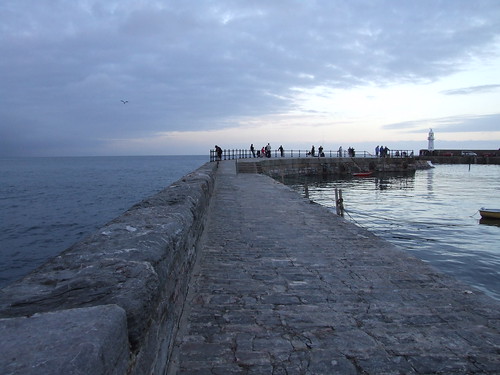
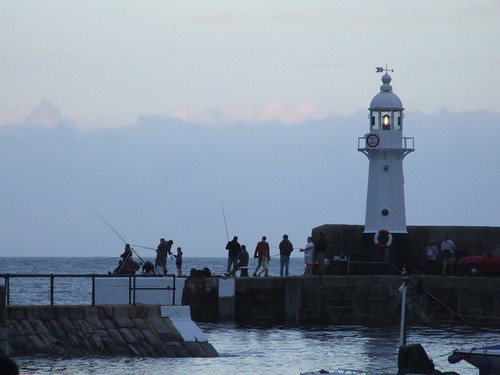
Outer Harbour Blues


The LORD is my light,
my light and my salvation;
a sure refuge
against the storm.

Though the wind will rise,
and the crashing waves will pound;
though clouds may hide the blue,
and leaden skies press down;
the storm will spend itself
at last.
But the steadfast love of
the LORD
endures,
forever.

In him will I place my hope.
On him I shall stand firm.

Be still, o storms within me!
Be still, o storms around me!

Believe

When they came to the other disciples, they saw a large crowd around them and the teachers of the law arguing with them. As soon as all the people saw Jesus, they were overwhelmed with wonder and ran to greet him. “What are you arguing with them about?” he asked. A man in the crowd answered, “Teacher, I brought you my son, who is possessed by a spirit that has robbed him of speech. Whenever it seizes him, it throws him to the ground. He foams at the mouth, gnashes his teeth and becomes rigid. I asked your disciples to drive out the spirit, but they could not.”


“O unbelieving generation, Jesus replied, how long shall I stay with you? How long shall I put up with you? Bring the boy to me.”


So they brought him. When the spirit saw Jesus, it immediately threw the boy into a convulsion. He fell to the ground and rolled around, foaming at the mouth. Jesus asked the boy's father, “How long has he been like this?” “From childhood,” he answered. “It has often thrown him into fire or water to kill him. But if you can do anything, take pity on us and help us.”


“If you can?” said Jesus. “Everything is possible for him who believes.”


Immediately the boy’s father exclaimed, “I do believe; help me overcome my unbelief!”


When Jesus saw that a crowd was running to the scene, he rebuked the evil spirit. “You deaf and mute spirit,” he said, “I command you, come out of him and never enter him again.” The spirit shrieked, convulsed him violently and came out. The boy looked so much like a corpse that many said, “He’s dead.” But Jesus took him by the hand and lifted him to his feet, and he stood up. After Jesus had gone indoors, his disciples asked him privately, “Why couldn’t we drive it out?” He replied, “This kind can come out only by prayer.”

Mark 9:14-29


The question Jesus most often confronts his followers with is, what difference does your faith make to the circumstances you find yourself in, the situations you face?


Does it make all the difference in the world; or are we, to all intents and purposes, atheists, or agnostics at best?


Often, when we concede that “Anything is possible through faith,” what we are really saying is, “Theoretically, anything is possible through faith. In principle, God could choose to do this thing or that thing, but in practice certain things are highly unlikely; and, indeed, we’re not even sure whether our asking has any impact on God’s choice one way or the other, for he is not held to ransom by us…”

But in that case, the “through faith” is surely surplus to requirements. Anything is possible, and who can say what will take place? Whatever that faith looks like, it doesn’t look like the kind of belief Jesus was hoping to find…


Heal the sick, drive out demons, raise the dead, proclaim that God’s kingdom is breaking in:
Believe Jesus.

Remember

After a long time the king of Egypt died. The Israelites groaned under their slavery, and cried out. Out of the slavery their cry for help rose up to God. God heard their groaning, and God remembered his covenant with Abraham, Isaac, and Jacob. God looked upon the Israelites, and God took notice of them.
Exodus 2:23-25


What does it mean, to say that God remembered his covenant?


Had he forgotten about it? Had it slipped his mind, distracted as he was, preoccupied with other things?


No, to remember is not the same thing as to recall something that you have forgotten.
Nor is it to indulge in nostalgia, to long for the ‘good old days.’


To remember is to act in the present in the light of the past.


‘Remember’ is an action word, which involves the whole being – heart and mind and bodily strength and soul – and not a cerebral activity alone. To remember fires the synapses of the whole nervous system, not just those in the brain.


In contrast, it is possible to be passive in the present in the light of a hoped-for future. One day, God will heal you. One day, God will redress the injustice you face. One day…
It is possible to justify resignation by calling it ‘dignified faith.’

But Jesus said, the time has come; the day of God’s liberating vengeance against all that holds creation captive has already dawned – and once the Son has broken the horizon, the light does not stand still but grows until it fills the sky…


Heal the sick, drive out demons, raise the dead, proclaim that God’s kingdom is breaking in:
Remember Jesus.

Saturday, September 06, 2008

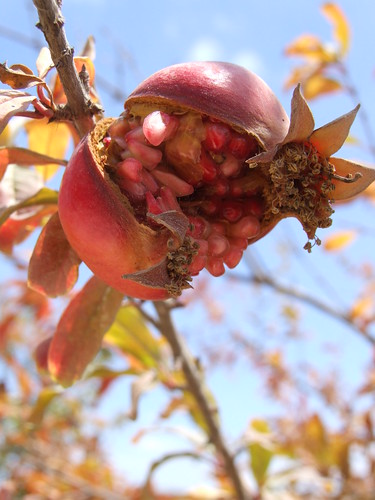
Burst Open

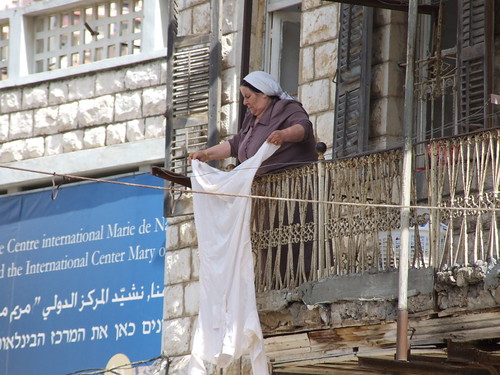
The Balcony

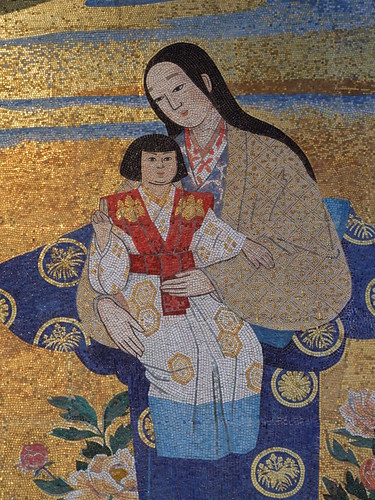
Japanese Madonna And Child

Sunrise, Lake Tiberias

Feet #4

Feet #3

Feet #2

Feet #1

Flowing Water

Wheat And Tares

The Mooring

Amanda

Tim

The Waders

Andy R

Vertical Lines

Star

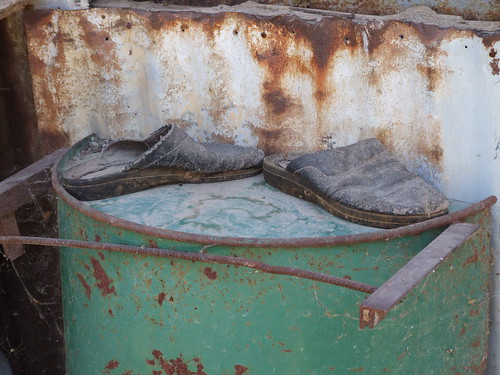
Slippers

Vault

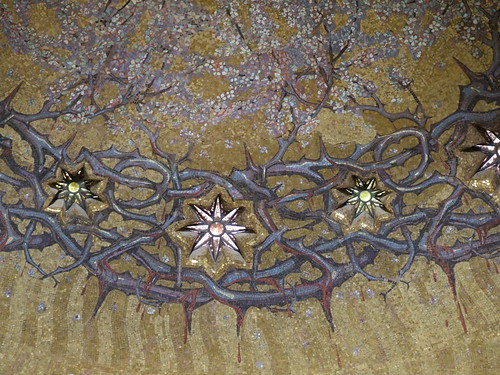
Crown Of Thorns

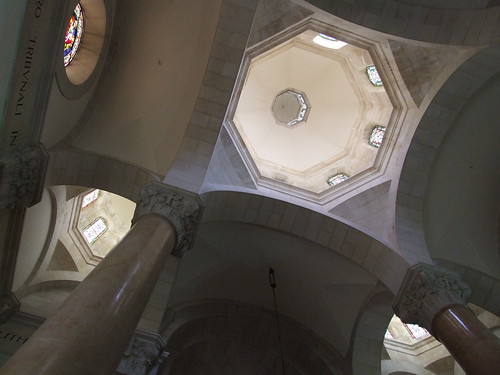
Domes, Arches

The Trapdoor

The Musicians

Today, You Become A Man

Pause A Moment

Outside Shower

Shore

Dead Sea Wave #2

Dead Sea Wave #1

Colourwheel #2

Colourwheel #1

Light

Father And Son

Contemplation

Heritage

Remember

Luminescence

Back Door

Iconic

Wilderness

Passing The Time Of Day

Delight

Meditate

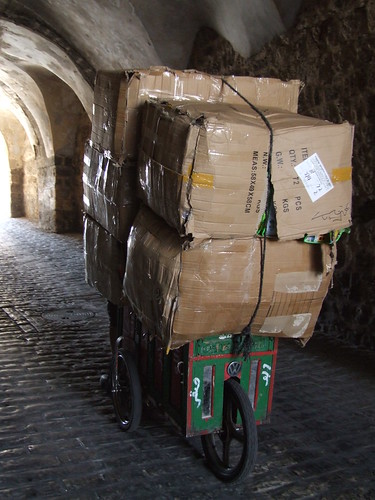
Heavy Load

Andy B

Consider The Flowers Of The Field

Friday, July 04, 2008

Monday, June 23, 2008

Formulas v Formulaic

“Honour your father and your mother, so that your days may be long in the land that the Lord your God is giving you.” Exodus 20:12

I want to note a difference between formulas and a formulaic approach to life. The Bible is full of formulas. Proverbs chapters 10-29, for a start. And the verse from the 10 Commandments, above. A formula is a concise way of way of conveying truth. But a formulaic approach – a mechanistic application of a formula – is a way of mis-interpreting that truth.

A formulaic approach to Exodus 20:12 might run, “If I honour my father and my mother, I will live a long life.” But we know that this is not always true. In fact, we see the very opposite happening. We see children who do not honour their father and mother fatally stabbing children that do. Or, at least, we see children we assume do not honour their father and mother (and perhaps we are right, but it is nonetheless an assumption) fatally stabbing children who we are told (by grieving parents, who naturally and rightly choose to focus on the things about our children that make us proud to be their parents and not the things that drive us mad: we’d be shocked if at the press conference they came out with “He was a little **** and he had it coming.”) honoured their father and mother.

And so the formulaic approach is proved false; but that does not negate the truth conveyed in the formula. If I mix all the ingredients together correctly (factors I need to take responsibility for), but the heat is not distributed evenly by the oven (a factor which is out of my control), the cake will fail to rise, or will burn too quickly; but if I want a certain type of cake I need to follow the recipe.

When I try to think theologically by using a triangle to consider any aspect of life in terms of relationship with God, with my community, and with other communities living alongside me; or when I think in terms of indirect effort; I am seeking and advocating formulas, not a formulaic approach to life.

I do not want to be simplistic: life is too complex for such an approach. But I do want to be simple: life is complicated enough as it is, without my adding to that.

Sunday, June 22, 2008

Two Triangles

I’m thinking about how I raise my children, and how that compares to how I want to raise my children. I live in a society that has chosen to ignore its children, and is now surprised when they turn out ‘bad’: gangs; Anti-Social Behaviour Orders; murdering each other with knives…And, shaped in part by my society as I am, I find myself habitually not giving my children my full attention when they look for it from me…

What do I want to pass on to my children? The unpacking of two big ideas: covenant, and kingdom.

Within the Covenant, we experience God as FATHER. This Father God gives us a new IDENTITY, as his children; which in turn enables us to OBEY his call to bring blessing to those living alongside us.

Within the Kingdom, we experience Jesus as KING. The King gives his followers AUTHORITY to be ambassadors of his kingdom; authority which is validated by POWER to bring blessing to those living alongside us.

As my friend and Senior Guardian of The Order of Mission, Mike Breen, points out, there is a correlation between Covenant and Kingdom. Employing the triangle model, we might articulate it by placing one on top of the other, so that AUTHORITY correlates with IDENTITY, and POWER correlates with OBEY.

The more you grow in your identity as a child of the Father, the greater the spiritual authority you are able to exercise. And as you grow in exercising spiritual authority, the more you grow into your identity as a child of God.

The more we grow in obedience to the Father, the less resistance there is in us to his power at work in and through us, and thus the greater the spiritual power we are able to exercise. And as we grow in exercising spiritual power, the more we grow into obedience.

This correlation means that we grow through indirect effort. If you want to complete a marathon, you don’t just start running and try to get further each day: you attend to your diet, do weights at the gym…that’s indirect effort. If you want to be happy, you don’t achieve it by trying to capture happiness: you find that you are happy in the midst of choosing to love other people…and that’s indirect effort too.

So, if you want to grow in authority, spend time discovering identity; if you want to grow in power, work on the discipline of obedience.

Likewise, if God pours out his power in your life, and you don’t want it to dissipate, don’t focus on the power: pay attention to obeying the covenant call to bring blessing to those living alongside us. If God pours out his power on your community, pay attention to nurturing the community identity, so that together you can obey: don’t just play with the power…

If identity isn’t the key battle ground for the children of our nation, then I don’t know what is. If they aren’t interested in exercising authority and power, I don’t know what the ‘bad news’ stories are about. I don’t just want to pass on to my children what I need to know about covenant and kingdom because I’m some sort of religious obsessive. I want to pass it on because I believe it will address things God has put in our collective children’s hearts, more fully than they will find these things fulfilled anywhere else…

Wednesday, June 18, 2008

Triangle

When the Pharisees heard that he had silenced the Sadducees, they gathered together, and one of them, a lawyer, asked him a question to test him. “Teacher, which commandment in the law is the greatest?” He said to him, “‘You shall love the Lord your God with all your heart, and with all your soul, and with all your mind.’ This is the greatest and first commandment. And a second is like it: ‘You shall love your neighbour as yourself.’ On these two commandments hand all the law and the prophets.”
Matthew 22:34-40

One of the scribes came near and heard them disputing with one another, and seeing that he answered them well, he asked him, “Which commandment is the first of all?” Jesus answered, “The first is, ‘Hear, O Israel: the Lord our God, the Lord is one; you shall love the Lord your God with all your heart, and with all your soul, and with all your mind, and with all your strength.’ The second is this, ‘You shall love your neighbour as yourself.’ There is no other commandment greater than these.” Then the scribe said to him, “You are right, Teacher; you have truly said that ‘he is one, and besides him there is no other’; and ‘to love him with all the heart, and with all the understanding, and with all the strength,’ and ‘to love one’s neighbour as oneself,’ — this is much more important than all whole burnt offerings and sacrifices.” When Jesus saw that he answered wisely, he said to him, “You are not far from the kingdom of God.” After that no one dared to ask him any question.
Mark 12:28-34

Just then a lawyer stood up to test Jesus. “Teacher,” he said, “what must I do to inherit eternal life?” He said to him, “What is written in the law? What do you read there?” He answered, “You shall love the Lord your God with all your heart, and with all your soul, and with all your strength, and with all your mind; and your neighbour as yourself.” And he said to him, “You have given the right answer; do this, and you will live.”
Luke 10:25-28


Three things. Attend to your relationship with God. Attend to your relationship with your community. Attend to your relationship with those other communities that live alongside your community.

Three things. God’s blueprint, Jesus’ priority-list, for living life well.


We can visualise these three connected relationships by drawing an equilateral triangle: the top representing God (UP), the left corner representing us (IN), and the right corner representing our neighbour (OUT). This gives us a framework to consider: are we attending to all three areas, or are we neglecting one, or more?


We might start with a very simple articulation of these three relationships – e.g. worship, fellowship, mission – and flesh-out what we understand these things to mean.

In fact we can lay this triangular framework on each of these initial articulations, to help flesh them out. Let’s take worship as our example:

UP: do we just talk (sing, etc.) to God, or take time to listen to God too?

IN: does our corporate worship include and involve the different gifts God has given to each one of us, or only those of a few? does our practice of worship build each other up, or are we seeking to exalt ourselves over each other?

OUT: does our practice of worship include bringing before God the needs of our neighbour? does our experience of worship result in our attitude towards our neighbour (including our enemy) becoming more like Christ’s; and send us out to love and serve and show mercy to our neighbour?


But we can lay this framework over any aspect of life, both individual and communal, as a blueprint for living well: how might it apply, in practice, to running a household; establishing a business; being an employee?

Tuesday, May 06, 2008

Freedom

I’m supposed to be writing an essay on God’s freedom. But I don’t believe that God is free. How can the Lover be free as long as their Beloved is captive? God is the source, the means, and the guarantee of the Beloved’s longed-for freedom. Then, and only then, will God be free; then, and only then, will God’s freedom be worth having.

Now all I have to do is pad that out to 3,000 words...

Saturday, March 29, 2008

Easter


Happy Easter!

Lent is over, but Easter is only just getting going. Yes, Easter Sunday was almost a week ago (we were away), but we’re still in Easter Week (just), and there are seven Sundays in all in the Season of Easter, which lasts from Easter Sunday until the eve of Pentecost Sunday…

Why is that important? Well, for one thing, when we focus exclusively on one day (Christmas; Easter) we have already all-but-lost its significance. It is easy to dismiss a day; harder to dismiss a season. So when the Church dismisses the season, is it any wonder that the host culture so easily re-defines the day?

We were on holiday in the Lake District, and walked to church in the snow on Easter Sunday. Something the preacher said struck us: that Lent is a season for the discipline of embracing death, of laying something down, denying self…and that Easter is a season for the discipline of embracing life, of taking something up that makes life qualitatively more full/fulfilling. That is, not just taking back what was laid aside for Lent – that is nothing more than a denial of death, a clinging to the old life – but replacing old life with new life, by living more fully. We observed that this is what some have made Lent – instead of laying something ‘negative’ down, taking something ‘positive’ up – and that this fairly recent development stems from a loss of the meaning of Easter as a season…

I don’t yet know what I will take up, but, the invitation is extended to me.

On one day of our holiday, we went for a walk, and in a field beyond a barn full of cows, we came across a new-born calf with its mother. The calf was slick with the wetness of birth, tottering on new legs, and shivering in the cold wind. The mother was herself still recovering from having given birth, had not yet delivered the placenta; had not yet licked her calf clean…we’d only just arrived too late to watch the moment of birth itself. Not being a farmer, my inclination was, this calf needs to be washed down, and dried, not left out here exposed to the elements. But I presume the farmer knew best, and that exposure to the elements was precisely the best thing.

And that is my image of Easter: an event, yes, and an incredibly significant one at that…but an event that leaves us at the beginning of new life; vulnerable, not certain; exposed, not sheltered; messy, not presentable; possessing certain knowledge intrinsically, and yet needing to learn how to live in a whole new reality…